
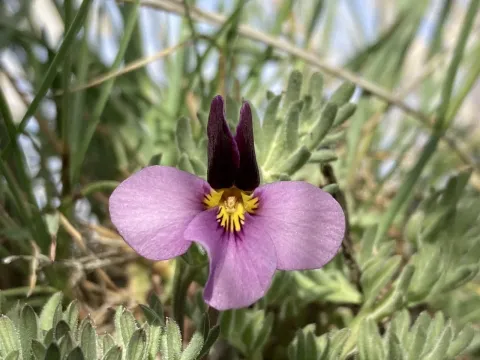
Beckwith's violet
Viola beckwithii
Beckwith's violet, scientifically known as Viola beckwithii, is a perennial herb belonging to the Violaceae family. This species is native to the western United States, where it is found in dry meadows, sagebrush flats, and rocky slopes at various elevations.
What the section contains
Beckwith's violet
The plant is characterized by a deep taproot, which is an adaptation to its natural arid habitat. It typically reaches heights of 5 to 15 centimeters and features deeply palmately lobed leaves, which distinguish it from many other common violet species.
The flowers are remarkably distinct, featuring deep purple or violet upper petals contrasted with lighter, yellowish, or white lower petals. This bi-colored appearance makes it a popular choice for rock gardens and native plant restoration projects.
To cultivate this species successfully, gardeners must provide full sun and extremely well-draining soil. It thrives in gravelly or sandy substrates and will struggle or perish if planted in heavy, water-retentive clay that leads to crown rot.
Agricultural management of this species is primarily focused on propagation, which is best achieved through cold-stratified seeds. Once established, the plant requires very little supplemental water or fertilizer, mimicking its natural ecological niche.
The most significant threat to Beckwith's violet is crown and root rot, which is almost exclusively caused by improper soil moisture levels. Poor drainage during the dormant period is the primary cause of plant loss in garden settings.
Fungal diseases, such as powdery mildew, may occur if the plants are crowded or located in areas with stagnant air. Maintaining proper spacing and ensuring adequate airflow are essential preventive measures for keeping the foliage healthy.
Slugs and snails present a constant threat to the early spring growth, as they find the tender leaves and flowers highly palatable. Using coarse mulch like gravel around the crown can help discourage these mollusks from reaching the plants.
Spider mites can occasionally infest the plants during the heat of the summer, especially if the plants are subjected to prolonged drought stress. Regular inspection during dry spells can help manage these infestations early.
While insects like aphids may occasionally visit the plants, they are rarely a primary cause of decline. Maintaining a balanced garden ecosystem with natural predators usually keeps pest populations at levels that do not require chemical intervention.