
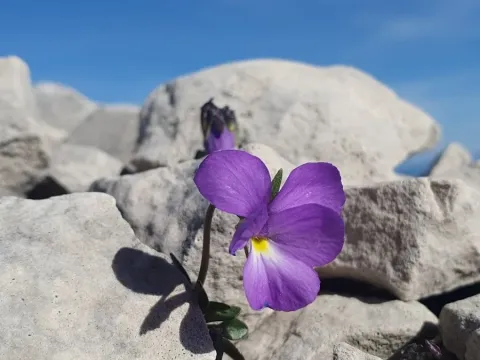
Cenis violet
Viola cenisia
The Cenis violet (Viola cenisia) is a perennial species belonging to the Violaceae family, naturally endemic to the high-altitude regions of the Alps. This plant has evolved to survive in harsh rocky habitats and scree slopes.
What the section contains
Cenis violet
The culture requires excellent soil drainage, mimicking the gravelly substrate of its alpine home. It performs best in poor, sandy, or stony soils with a neutral to slightly alkaline pH, as it is highly susceptible to root rot caused by moisture retention.
Full sun exposure is a fundamental requirement for the Cenis violet. It thrives in open locations where intense light encourages compact growth and the development of its characteristic cushion-like habit, essential for its survival in mountainous zones.
For cultivation in lowland gardens, the plant demands specific care to avoid summer heat stress. It is primarily recommended for rock gardens or specialized alpine troughs where environmental conditions can be strictly controlled to maintain coolness.
Propagation is generally achieved through seeds, which require a period of cold stratification before germination. This natural process breaks seed dormancy and ensures that the seedlings emerge during the favorable conditions of spring.
The primary threat to the Cenis violet is waterlogging of the crown and root system. Inadequate drainage in garden soil or heavy substrate compositions rapidly leads to fatal fungal infections and root decay, significantly limiting the plant's lifespan.
Pests such as slugs and snails pose a consistent threat to the foliage and flowers. In damp environments, these mollusks can destroy the delicate structure of the plant, necessitating protective measures like grit mulching or physical barriers.
Poor air circulation is another significant risk factor that promotes the development of leaf spot diseases. Ensuring sufficient space between individual plants and maintaining a clean, weed-free environment is critical for overall plant vigor.
Under glasshouse or indoor cultivation, spider mites may become a problem if the atmosphere becomes too warm and dry. Regular monitoring is necessary, combined with maintaining a moderate level of humidity that does not compromise root health.
Over-fertilization represents a major risk, as excess nutrients encourage leggy growth and reduce the plant's natural resistance to environmental stress and pathogens. Strict moderation in nutrient application is key to success.