
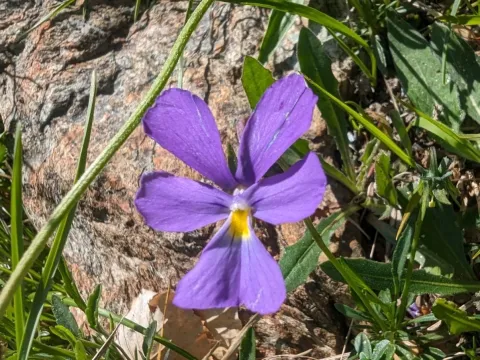
Bertoloni's violet
Viola bertolonii
Sowing Bertoloni's violet seeds is best performed in late winter or early spring using a protected environment. Since this species originates from alpine regions, the seeds often require a period of stratification to germinate successfully, mimicking the winter conditions of its natural habitat.
What the section contains
Bertoloni's violet
Seeds should be sown on the surface of a light, well-draining substrate, as they are light-dependent and require exposure to illumination for germination. Minimal covering with fine grit or vermiculite is recommended to maintain humidity without obstructing light access.
Temperature control is vital during the germination phase, with ideal levels ranging from 15 to 18 degrees Celsius. Once the seedlings develop their first true leaves, they should be carefully pricked out into individual pots to ensure they have enough space for healthy root development.
The hardening-off process is essential before transplanting seedlings into the open garden. Gradually exposing the plants to outdoor conditions over several weeks helps them adapt to temperature fluctuations and wind exposure, significantly increasing their survival rate.
Planting in the final location should be done with a spacing of 20x20 cm. Proper spacing is critical to ensure airflow, which helps prevent the development of fungal diseases that are common in dense, poorly ventilated planting sites.
Bertoloni's violet (Viola bertolonii) is a distinct species within the Violaceae family, known for its preference for serpentinite or calcareous mountain soils. It is a compact, perennial plant that has evolved to thrive in nutrient-poor environments, making it a unique candidate for rock gardens.
The soil requirements are strict: the medium must be exceptionally well-draining. Adding gravel or crushed stone to the soil mixture is standard practice to prevent waterlogging, which is the primary cause of plant failure in this species.
Sunlight exposure is a critical factor for the vigor of this violet. It performs best in full sun to light shade, where it can maintain its compact growth habit. Excessive shade leads to weak stems and a significant reduction in the quantity and quality of its blossoms.
Climate preferences include cool, temperate conditions with moderate rainfall. The plant is hardy, capable of withstanding cold winters, provided that the soil is not prone to heaving or saturated with freezing water during the dormant season.
Maintenance involves routine weeding around the plants and the removal of spent flowers to encourage further blooming. Fertilizer use should be sparing, as excessive nutrients can force vegetative growth at the expense of floral display and overall hardiness.
Fungal diseases represent the most frequent threat to Bertoloni's violet. Powdery mildew can occur if air circulation is restricted or if plants are watered in a way that leaves moisture on the foliage for extended periods, especially during humid nights.
Root rot is a catastrophic condition caused by poor soil drainage. When the soil remains waterlogged, the roots lose their ability to respire, quickly leading to the death of the plant. Prevention through proper soil preparation is much more effective than treatment.
Slugs and snails pose a major threat, particularly to young, tender leaves in the spring. Protective measures such as creating physical barriers or using baits are highly effective in preserving the plant's aesthetic value during the peak growing season.
Aphids may cluster on flower buds, draining the plant's resources and causing stunted growth. Early intervention with insecticidal soap or targeted horticultural sprays can prevent these populations from growing to levels that cause visible damage.
Spider mites are a potential concern in hot, dry weather conditions. They often hide on the undersides of leaves, causing them to yellow and wilt. Maintaining proper humidity levels and ensuring the plants are well-watered helps to deter these persistent pests.