
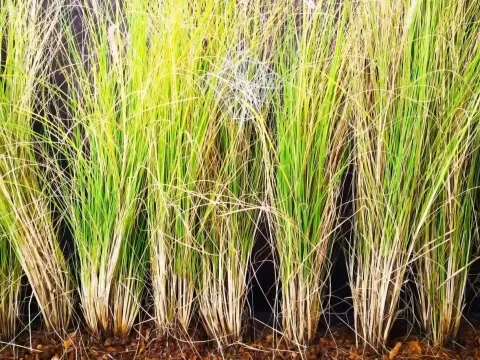
Vetiver
Vetiveria
Vetiver (Vetiveria zizanioides) is a perennial bunchgrass belonging to the Poaceae family, primarily propagated through vegetative crown division.
What the section contains
Vetiver
The optimal planting window corresponds to the onset of the rainy season, ensuring adequate soil moisture for the rapid establishment of the root system.
For soil stabilization purposes, planting is done in dense single-row hedgerows to create a biological barrier against erosion and runoff.
Commercial plantations for root production are typically established with wider spacing to allow for sufficient root development over an 18 to 24-month cycle.
Early maintenance is critical; young plants must be kept free from competing weeds to ensure they capture sufficient solar energy for initial growth.
Vetiver is a tropical crop that thrives in temperatures ranging from 20 to 35 degrees Celsius, showing reduced growth rates in colder conditions.
The plant is highly resilient, capable of growing in a wide variety of soil types, ranging from sandy soils to heavy clays, and across a broad pH spectrum.
Full sunlight is a fundamental requirement for the plant; shading significantly impacts the accumulation of biomass and the quality of the root oil.
It exhibits remarkable tolerance to extreme conditions, including prolonged drought and temporary waterlogging, making it a robust choice for marginal lands.
While minimal soil preparation is needed, ensuring proper drainage is beneficial to maintain the specific chemical profile of the essential oil stored in the roots.
The main economic output of vetiver cultivation is the root system, which serves as the primary source for high-value essential oil used in the fragrance industry.
Typical yields vary depending on climatic factors and management, generally falling between 5 to 10 tons of dried roots per hectare in mature plantations.
Harvesting timing is vital, as the concentration of vetiverol and other key compounds in the roots peaks when the plants reach maturity, usually after two years.
The aerial part of the plant is also utilized in agriculture as a byproduct for livestock fodder, mulch, or as raw material for handicrafts and paper.
Efficiency in distillation processes directly influences the final yield and quality of the oil extracted from the raw root material.
Vetiver is exceptionally resistant to pests and diseases due to the presence of natural terpenoids, which act as deterrents for most insects.
There are no major agricultural pests that threaten the survival of vetiver crops, making it a reliable and low-risk investment for farmers.
Fungal issues may arise only in conditions of extremely poor aeration and excessive stagnant moisture, which are generally avoided through proper spacing.
Biological resilience makes the crop ideal for integrated pest management systems, as it does not require significant chemical input for protection.
The primary agronomic concern is usually environmental rather than biological, ensuring that the plant stays healthy during the intense development phase.
Harvesting vetiver is a labor-intensive operation because the complex root system can penetrate several meters into the soil structure.
Mechanical assistance, such as deep-plowing equipment, is required to effectively extract the roots while minimizing damage to the material.
Once harvested, the roots must be thoroughly washed to remove soil and debris before they are processed for oil extraction or dried for storage.
To preserve the delicate aroma and medicinal properties of the oil, processing should happen shortly after the roots are removed from the ground.
After the harvest, the soil is often left in an improved structural state, making it fertile ground for subsequent agricultural use or replanting.