
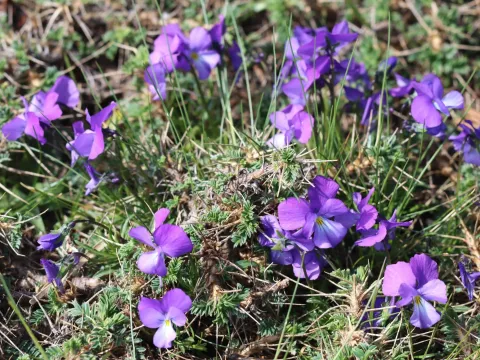
Chelmos violet
Viola chelmea
Chelmos violet (lat. Viola chelmea) is a perennial herbaceous plant belonging to the Violaceae family. It is an endemic species native to the mountainous regions of Greece, primarily found in rocky, high-altitude limestone habitats.
What the section contains
Chelmos violet
The plant thrives in cool, alpine climates. In cultivation, it requires a position with bright but filtered light, particularly protected from the intense heat of the mid-afternoon sun, which can cause significant stress to its foliage.
The soil requirements are strict: the medium must be exceptionally well-drained, porous, and gritty. A neutral to alkaline pH level is ideal to replicate its native rocky environment, ensuring the root system remains healthy and free from stagnation.
Botanically, Viola chelmea is characterized by a compact rosette of leaves. Its growth habit is perfectly adapted to crevices and stony substrates, where it utilizes its small size to compete for limited moisture and nutrients in harsh mountain conditions.
Its ornamental utility is primarily restricted to specialized rock garden collections and alpine frames. Due to its rarity and specific ecological needs, it is highly sought after by enthusiasts of rare mountain flora for its delicate appearance and resilience to cold.
The primary threats to Viola chelmea in cultivation include fungal pathogens such as root rot and gray mold, which are predominantly caused by excessive moisture and poor air circulation around the crown.
Common garden pests such as aphids, spider mites, and leaf-chewing insects can pose risks. Early monitoring and the use of appropriate horticultural soaps or systemic insecticides are recommended to maintain plant vitality.
Slugs and snails are particularly attracted to the tender foliage during the spring growing season. Protective measures, including physical barriers or baits, should be implemented to prevent significant structural damage.
Preventive maintenance involves removing dead plant material to minimize the risk of pathogen spread. Keeping the crown of the plant dry by using a top dressing of fine grit is a standard practice for this species.
Proper water management is essential for long-term health; irrigation should be applied cautiously, ensuring the substrate dries slightly between waterings to prevent the development of root-borne pathogens.