
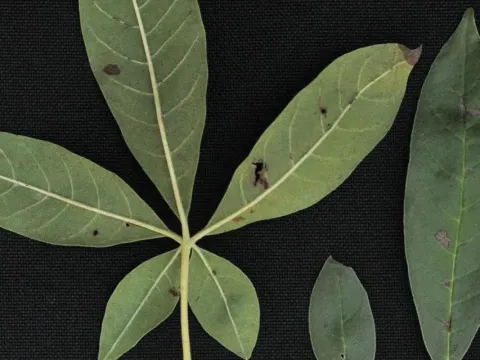
Vitex amboinensis
Vitex amboinensis
Vitex amboinensis is a perennial woody plant, typically propagated via seeds or vegetative cuttings in controlled greenhouse environments to ensure high germination rates.
What the section contains
Vitex amboinensis
The seeds possess a hard coat that often requires scarification or specific temperature treatments to break dormancy before being planted in a nutrient-rich substrate.
Sowing should be performed during the warm season, maintaining soil moisture levels consistent with the tropical climate typical for this specific Lamiaceae species.
Young seedlings require careful acclimatization, moving from shaded propagation trays to brighter areas to strengthen the stems before final field transplanting.
Proper spacing is crucial when planting to ensure adequate air circulation and to minimize competition for nutrients between individual trees in the plantation.
This species thrives in tropical and subtropical regions where temperatures remain consistently warm throughout the year without risk of severe frost.
Well-drained soils, preferably loamy or sandy-textured, are ideal for cultivation as they prevent waterlogging, which the root system of Vitex is sensitive to.
Sunlight exposure is a primary requirement; the plant performs best in full sun but can tolerate partial shade during its initial establishment phase.
Adequate water supply is necessary, especially during the dry season, to maintain leaf turgor and support continuous growth cycles in the forest environment.
The addition of organic compost and balanced fertilizers helps sustain soil fertility, which is essential for maximizing the growth rate and quality of the timber.
Vitex amboinensis is susceptible to several common tropical pests, including various species of wood-boring beetles that can affect stem integrity.
Leaf-feeding caterpillars and aphids may cause damage to the canopy, particularly during periods of new leaf flush when tissues are soft and high in nitrogen.
Fungal pathogens associated with high humidity, such as root rot, can pose a significant threat if drainage on the plantation site is not properly managed.
Regular monitoring of tree health, including inspecting the bark for entrance holes or frass, is recommended to identify early signs of insect infestations.
Integrated pest management strategies are often employed to control outbreaks, focusing on natural predators and avoiding excessive chemical interventions.
The harvesting of Vitex amboinensis primarily focuses on its valuable timber, which is appreciated for its durability and resistance to environmental decay.
Medicinal harvesting of leaves and fruits is timed to coincide with maturity, ensuring that the concentration of secondary metabolites is at its highest level.
The fruits should be collected using clean tools to avoid bruising, followed by immediate cleaning and drying to preserve their chemical composition for research or utility.
Timber harvesting is conducted on a multi-year rotation, selecting trees that have reached appropriate diameters for the intended industrial or construction purposes.
Following the harvest, proper storage conditions are required to prevent moisture accumulation and microbial growth, particularly in tropical climates.