
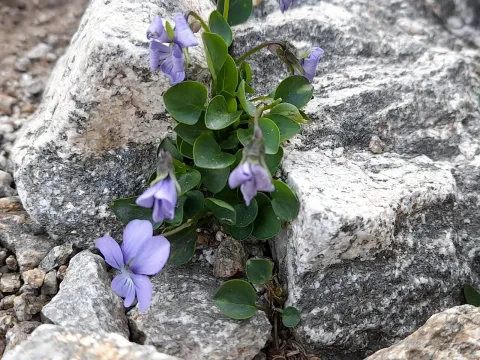
Viola nummulariifolia
Viola nummulariifolia
Viola nummulariifolia is a rare alpine species belonging to the Violaceae family. Native to high-altitude mountain ranges, it is naturally adapted to harsh, rocky environments, which dictates its specific propagation requirements.
What the section contains
Viola nummulariifolia
The most effective method of propagation is sowing seeds in late autumn. This allows the seeds to undergo natural cold stratification throughout the winter, which is essential for breaking dormancy and ensuring successful germination.
If sowing in the spring, artificial stratification is mandatory. Seeds should be kept in a moist medium in a refrigerator for at least 6–8 weeks before being moved to a warm environment to trigger growth.
Young seedlings grow quite slowly and require careful attention to moisture. The substrate must remain consistently damp but never waterlogged, and seedlings should be shielded from intense, direct sunlight during the early stages of development.
Transplanting into the garden should occur once the risk of frost has passed. Planting the seedlings in well-drained, rocky soil is critical to their long-term health and establishment in a permanent location.
Viola nummulariifolia thrives in conditions that mimic its natural mountain habitat. It requires extremely well-drained, porous soil; adding gravel, grit, or coarse sand is essential to prevent water from stagnating around the root crown.
The plant prefers sites with bright, indirect light. While it enjoys sunny positions, it is highly sensitive to overheating during peak summer afternoons, making light afternoon shade a beneficial feature in warmer climates.
Soil pH should ideally be neutral or slightly acidic. The plant does not require high levels of nutrients; in fact, overly rich soil can lead to lush but weak growth, making the plant more susceptible to diseases.
A cool, moist atmosphere is ideal for this species. In areas with dry, hot summers, growers should provide regular misting or overhead watering during the early morning to lower the localized temperature.
Proper airflow is another key requirement. Crowding the plant with other vegetation can lead to humidity pockets, which promote fungal infections. A gravel mulch around the base of the plant is recommended to keep the foliage dry.
The primary use of Viola nummulariifolia is decorative. It is highly valued in rock gardens, scree beds, and crevice plantings due to its charming, low-growing habit and rounded, evergreen-like foliage.
Seed collection should be carried out just before the seed capsules burst. Since ripening is often uneven, daily monitoring is necessary during the seed-set phase to ensure a successful harvest.
Vegetative propagation via division is also possible and is best performed after the primary flowering period. Carefully splitting the clump allows for a wider spread of the plant across the rockery.
While the plant has no significant agricultural or culinary use, it is an important specimen for alpine plant enthusiasts and collectors who seek to maintain biodiversity in specialized garden environments.
By providing adequate space and ensuring the soil remains gritty, the plant will form dense, attractive mats that persist for many years, providing continuous aesthetic appeal in alpine compositions.
Spider mites and aphids are the most common pests, particularly during hot, dry spells. These insects feed on the plant's sap, potentially weakening the foliage and leading to stunted growth.
Fungal diseases such as powdery mildew and root rot are significant risks when drainage is inadequate or air circulation is poor. Proper spacing and the use of a gravel mulch are the best preventive measures.
Slugs can cause mechanical damage to the leaves during rainy periods. If infestation occurs, using non-toxic barriers or iron phosphate-based pellets around the perimeter of the plant can effectively manage the problem.
Root rot is often fatal and is almost always caused by waterlogged soil. If a patch appears yellowed or wilted, it should be investigated for rot immediately, and drainage in that area must be improved.
- Ensure proper drainage in all planting zones.
- Monitor for pests early in the growing season.
- Maintain a layer of grit to prevent leaf contact with damp soil.
- Apply fungicide only if disease symptoms are clearly present.