
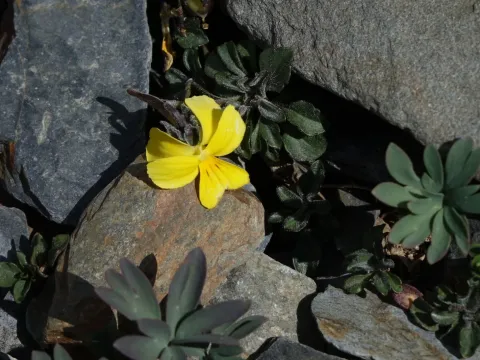
Viola minuta
Viola minuta
Viola minuta is a perennial herbaceous plant classified within the Violaceae family. Its native habitat includes mountainous regions and rocky alpine meadows, where it thrives in cool, humid environments with well-drained substrate conditions.
What the section contains
Viola minuta
Botanically, the plant is characterized by a low-growing habit with dense basal rosettes. Its leaves are small and delicate, often finely serrated, which allows the species to maintain moisture levels even in exposed rocky environments by clustering close to the ground.
For successful cultivation, Viola minuta requires soil that is rich in organic matter and possess excellent drainage properties. It prefers semi-shaded locations, as intense mid-day sun can lead to dehydration and scorched foliage, especially in drier climates.
The plant is adapted to moderate climatic conditions, favoring cool summers and consistent moisture. During the growing season, it is essential to monitor soil humidity, as both prolonged drought and waterlogging can be detrimental to its root system.
In professional landscaping, it is utilized as an ornamental ground cover for rock gardens and borders. Its ability to create dense, low-growing mats makes it an excellent choice for stabilizing soil in ornamental alpine rockeries.
The primary threats to Viola minuta health include fungal pathogens, particularly powdery mildew and leaf spot diseases. These issues typically emerge when the planting site lacks proper airflow or when humidity levels remain persistently high around the foliage.
Pests such as spider mites, aphids, and slugs present recurring management challenges. Aphids often congregate on the undersides of leaves, causing structural damage and weakening the plant, which makes it more susceptible to opportunistic secondary infections.
Effective management begins with strict sanitation practices. Removing decaying plant matter and ensuring appropriate spacing during planting are crucial for reducing the micro-environments where fungi and pests prefer to thrive.
In cases of significant infestation, targeted application of environmentally safe fungicides or insecticides may be necessary. It is important to apply these treatments during periods of low pollinator activity to maintain ecological balance in the garden.
Regular maintenance, including light pruning to improve aeration and proper fertilization during the active growth phase, contributes to a robust plant. A strong, healthy specimen demonstrates significantly higher resistance to the typical pressures of disease and insect feeding.