
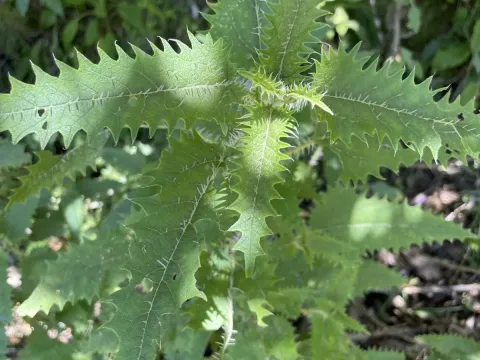
Tree nettle
Urtica ferox
Urtica ferox, commonly known as tree nettle or ongaonga, is a distinctive woody shrub belonging to the Urticaceae family. Endemic to New Zealand, it stands out due to its substantial height, which can reach up to three meters in favorable conditions.
What the section contains
Tree nettle
The plant thrives in fertile, well-drained soils rich in organic matter. It is typically found in lowland forests, scrublands, and forest margins, showing a preference for areas with moderate sunlight and protected from strong, drying winds.
Cultivation requires stable environmental conditions, as the species is sensitive to extreme heat and prolonged drought. Consistent soil moisture levels are crucial, particularly during the active growing season in spring and early summer.
Botanically, the plant is characterized by large, stinging spines that cover its stems and leaves. These spines contain complex toxins, including serotonin and acetylcholine, which cause severe and long-lasting pain upon contact, necessitating professional protective gear during handling.
While Urtica ferox is not a primary agricultural crop, its ecological niche is significant. Understanding its growth requirements helps in maintaining biodiversity and managing areas where this species naturally occurs or is cultivated for botanical purposes.
The plant faces several biotic challenges, including specialized insect pests that have co-evolved to withstand its toxic defenses. These insects can cause localized damage to foliage if left unmanaged in concentrated populations.
Fungal pathogens such as powdery mildew can affect the shrub, especially in environments with poor air circulation or excessive humidity. Preventive measures include proper spacing and pruning to maintain healthy airflow.
Root rot, driven by waterlogged soil conditions, poses a significant threat to the overall longevity of the plant. Ensuring adequate drainage is a fundamental aspect of site selection and soil preparation for this species.
Viral infections can occasionally lead to structural deformation of leaves and reduced overall growth. Early detection and the removal of severely affected parts are essential to curb the spread within a managed garden or plantation.
Management of these threats requires a systematic approach, combining physical monitoring with cautious use of biological controls to ensure the health of the plant while respecting its hazardous properties.