
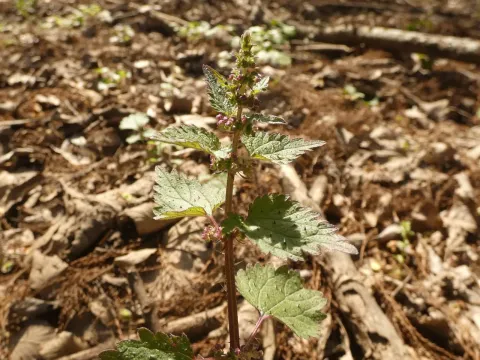
Weaknettle
Urtica chamaedryoides
Weaknettle (Urtica chamaedryoides) is an annual herbaceous plant belonging to the Urticaceae family. Unlike common perennial nettles, it is characterized by a shorter stature and leaves that resemble those of germander (Teucrium), giving it a distinct appearance.
What the section contains
Weaknettle
The plant is native to North America and typically occupies moist, shaded habitats, such as open woodlands, floodplains, and damp pastures. In agricultural settings, it is often treated as a weed that colonizes nutrient-rich, damp soil areas effectively.
Climatic requirements for this species are centered on temperate conditions with sufficient moisture. It performs best during the cool, damp months of spring, as it is sensitive to intense summer heat and direct sunlight, which can limit its growth period.
Soil preferences lean toward organic-rich, loamy substrates that hold moisture without becoming waterlogged. It thrives in disturbed soils where competition from other vigorous perennials is temporarily reduced by cultivation or grazing pressure.
Agricultural management primarily involves mechanical control, such as shallow tillage or mowing, before the plants set seeds. Due to the presence of stinging hairs on its foliage, protective gear is essential when handling the plants to avoid skin irritation.
Fungal diseases like powdery mildew are common in dense populations, especially when humidity levels remain high for extended periods. These pathogens cover the leaves in a whitish coating, inhibiting photosynthesis and stunting the plant's overall development.
Leaf-feeding insects, including various beetles and caterpillars, are among the most prevalent pests. These insects can rapidly defoliate plants, reducing their competitive advantage in the local plant community during their rapid growth phase.
Aphids often target the tender terminal shoots of the plant, causing curled leaves and stunted growth. By sucking sap, these pests also create wounds that can serve as entry points for secondary bacterial or viral infections.
Soil-borne nematodes can compromise the root systems, leading to poor nutrient uptake and reduced vigor. In heavily infested areas, this may manifest as patches of stunted or yellowing plants that fail to produce flowers or seeds effectively.
Effective management against pests requires a combination of sanitation and strategic timing of weed control efforts. Removing plant debris from the field and maintaining clean field borders help reduce the habitat available for both insect vectors and pathogen survival.