
Urena lobata
Urena trilobata
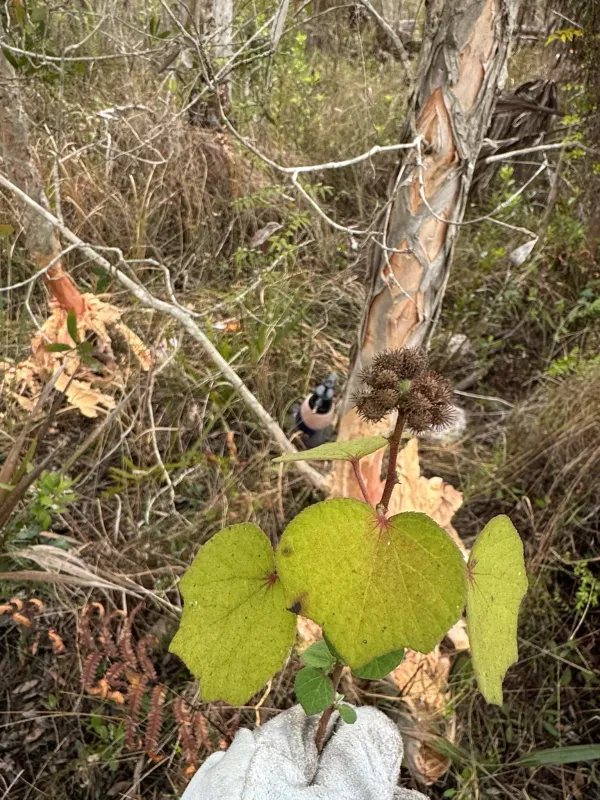
Description
Sowing dates
Sowing of Urena lobata is carried out in warmed soil, when the temperature of the top layer remains stable above 15-18 degrees Celsius. The optimal time to start fieldwork in subtropical regions is considered to be the period after the end of the last spring frosts.
Seeds are sown in rows with spacing varying from 30 to 50 centimeters to ensure the necessary plant density. The planting depth for the seeds usually does not exceed 2-3 centimeters, which guarantees uniform emergence when soil moisture levels are sufficient.
The seeding rate is calculated based on cultivation goals: for high-quality bast fiber production, planting density must be high to stimulate the growth of long, sparsely branched stems. Overly sparse stands lead to the formation of powerful lateral shoots, which lowers the quality of the raw material.
The crop is characterized by rapid early growth, so it is important to timely manage weeds during the early stages of vegetation. In the first weeks after germination, Urena is extremely sensitive to competition for nutrients and sunlight.
The use of modern precision seeders allows for minimizing manual labor during plantation establishment. Adhering to the optimal planting scheme is a critical factor for ensuring a uniform fiber harvest.
Growing requirements
Urena lobata belongs to the Malvaceae family and is a tropical or subtropical annual or perennial plant. The primary natural range covers regions with hot and humid climates where the crop thrives most successfully.
Successful plant growth requires plenty of sunlight and consistently high temperatures throughout the entire growing season. The crop reacts extremely negatively to freezing temperatures and frost, which can completely destroy the harvest.
Soil preferences for Urena include light, well-drained fertile soils with a neutral or slightly acidic pH. Waterlogging in the field is unacceptable as it provokes the development of fungal root diseases and general growth inhibition.
Ensuring adequate irrigation during the active stem growth phase significantly increases biological yield. Although the crop possesses moderate drought tolerance, moisture deficiency leads to premature woodiness of the stems and reduced fiber quality.
The plant responds well to organic and mineral fertilizers, especially nitrogen compositions, which stimulate rapid vegetative growth. Balanced nutrition is the key to producing high-quality textile raw materials on an industrial scale.
Yield
The primary commercial use of Urena is for the production of high-strength bast fiber. The fiber of this plant is physically and chemically similar to jute and kenaf, which allows it to be used in the textile industry.
Stems of Urena are used to manufacture twine, ropes, technical fabrics, burlap, and carpet backing. The biodegradable nature of this natural material makes it sought-after in the modern market for eco-friendly raw materials.
In addition to fiber, Urena lobata can find applications in the paper industry as an additive in the production of packaging materials. The high cellulose content makes stem processing waste a promising feedstock for secondary usage.
Urena seeds contain industrial oils that can be extracted and used in the chemical or paint industries. Although the oilseed direction is secondary, it helps to increase the overall economic efficiency of the crop cultivation.
With compliance with all agronomic requirements, the yield of dry mass per hectare can be quite high, making Urena an attractive option for cultivation in regions with a suitable climate. The stability of harvest depends on management intensity and soil fertility.
Main diseases and pests
Typical pests of Urena are insects from the orders Coleoptera and Lepidoptera that feed on the leaves and young shoots of the plant. Regular monitoring of plantations allows for timely identification of infection hotspots and the application of biological or chemical protection measures.
Fungal diseases, such as Fusarium or root rots, often develop when soil moisture management is poor. Prevention includes crop rotation and the use of disease-resistant breeding varieties.
Viral infections transmitted by aphids or whiteflies can significantly reduce the productivity of plantings. Controlling vector insects is an important element of protecting the crop from such pathogens throughout the season.
Nematodes that infect the root system in warm climates can significantly weaken the plants and lead to premature death. Utilizing specialized control methods, including planting cover crops, helps to manage the population of harmful organisms.
A comprehensive approach to protection, including agronomic methods, biological control, and targeted insecticide application, ensures the health of the crops. An integrated pest management system allows for minimizing harvest loss risks.
Harvesting
Harvesting Urena for fiber begins in the mass flowering phase, when stems reach maximum strength and fibers exhibit optimal quality characteristics. Harvesting too early yields immature fiber, while harvesting too late makes it tough and difficult for primary processing.
Mechanized harvesting is performed using mowers-binders or specialized harvesters. The cut stems are bundled for transport to the primary processing site or for retting in the field.
One of the key stages of post-harvest processing is the retting process, necessary for separating fiber from the woody stem core. The quality of the resulting material depends largely on the duration and conditions of this stage in water bodies or special tanks.
After retting, the raw material undergoes drying, cleaning, and combing to obtain a ready-to-sell product. Modern primary processing technologies significantly reduce losses of valuable fiber when separating it from the shives.
Storing the finished fiber requires dry, well-ventilated premises protected from moisture and direct sunlight. Proper storage management allows for preserving the physical properties of the material until it is shipped to textile factories.