
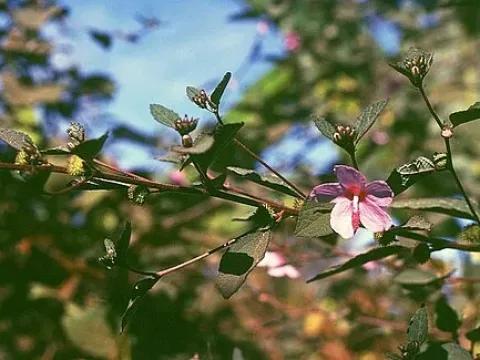
Urena tomentosa
Urena tomentosa
Urena tomentosa is a tropical crop that requires stable, warm temperatures and the arrival of the rainy season to successfully establish its seedlings in the field.
What the section contains
Urena tomentosa
The optimal sowing time begins once soil temperatures consistently exceed 20 degrees Celsius, ensuring rapid germination and uniform growth across the plantation.
Seed preparation is often necessary to overcome the natural dormancy caused by the hard outer coat of the seeds, which can otherwise lead to erratic emergence patterns.
Industrial cultivation typically employs a wide-row spacing method, allowing for efficient mechanical weed control during the critical early stages of the plant's development.
It is important to align planting dates precisely with local photoperiod conditions to prevent the plant from transitioning prematurely into the reproductive phase, which compromises fiber quality.
Belonging to the Malvaceae family, Urena tomentosa thrives in fertile, well-drained loamy soils that possess high organic matter content and a neutral pH level.
The plant has high water requirements throughout its growing season but is extremely sensitive to waterlogging, which necessitates excellent soil drainage capabilities.
Temperature is a key limiting factor; this crop requires a frost-free environment with consistent temperatures above 25 degrees Celsius for optimal biomass production.
Exposure to full sunlight is essential for the healthy development of the stalks, as shade can lead to spindly, weak growth and reduced fiber content in the stem.
Maintaining soil structure through appropriate tillage and organic fertilization is crucial, as this plant depletes soil nutrients relatively quickly during its fast-growing phase.
The yield of Urena tomentosa is highly dependent on nitrogen-rich fertilization, which supports the rapid elongation of the stalks needed for high-quality bast fiber extraction.
When managed under ideal conditions, the dry fiber yield per hectare can be substantial, making it a competitive technical crop in regions suitable for its growth.
Achieving the correct plant density is paramount; excessive spacing promotes branching, which is undesirable as it complicates fiber processing and lowers overall yield quality.
Consistent irrigation strategies are necessary to prevent growth stunting, especially during dry spells that frequently occur in tropical and subtropical growing regions.
Productivity is also influenced by the timing of nutrient applications, which should coincide with the peak vegetative growth period to maximize the total dry mass harvest.
Sucking insects, including aphids and spider mites, are the primary pests that attack Urena tomentosa, particularly during hot and dry spells when plant resistance is lower.
Fungal diseases, such as leaf spot, are prevalent in high-humidity environments and can rapidly degrade the leaf surface, impacting the plant's photosynthetic efficiency.
Root rot pathogens pose a significant threat in poorly drained or waterlogged soils, requiring strict monitoring of irrigation levels to avoid total crop loss.
Weed management is vital during the first two months, as young Urena plants grow slowly and are easily outcompeted for light and soil nutrients by invasive grasses.
Viral infections, often transmitted by insect vectors, can cause stem deformation and necrosis, rendering the fiber unsuitable for industrial textile production.
Harvesting should take place at the stage of technical maturity, typically when the plants reach maximum height but before the stems begin to lignify significantly.
Mechanical harvesters are utilized to cut the stalks efficiently, forming them into bundles that are subsequently transported to retting facilities for fiber processing.
The retting process, either in stagnant water bodies or controlled tanks, is essential to loosen the fiber from the woody core through natural microbial action.
Post-harvest handling requires immediate drying in ventilated conditions to ensure the quality of the fiber and prevent fungal growth during storage.
Once dried and cleaned, the fiber is pressed into bales, providing a compact and stable product ready for transport to spinning mills and textile manufacturers.