
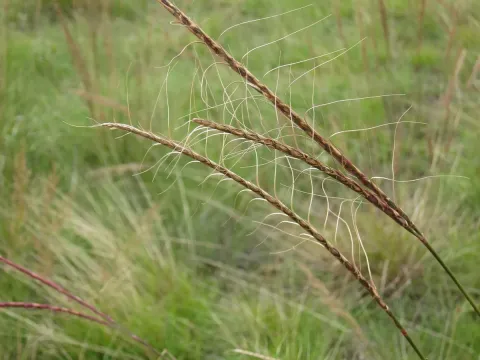
Urelytrum squarrosum
Urelytrum squarrosum
Urelytrum squarrosum is a perennial grass species belonging to the Poaceae family, widely recognized as a significant component of tropical and subtropical African ecosystems.
What the section contains
Urelytrum squarrosum
The plant exhibits a bunch-forming growth habit with rigid stems and linear leaves, which are well-adapted to the environmental stresses of savanna landscapes.
Regarding its habitat requirements, this grass thrives in well-drained soils and is capable of withstanding prolonged dry seasons due to its resilient root system.
The cultivation and natural spread of this species depend on moderate moisture availability during the growing season and sufficient exposure to sunlight for optimal development.
In terms of agricultural utility, it serves as a reliable forage source for livestock, contributing to the productivity of natural pastures in its native range.
The plant can be susceptible to various fungal diseases, such as rusts, which often manifest during periods of high humidity and can affect biomass yield.
Insect pests, particularly locusts and other leaf-feeding arthropods, are known to cause significant damage, especially in regions with high population densities of these pests.
Degradation of stands is frequently associated with overgrazing, which prevents the plant from setting seed and recovering its root reserves after intensive herbivory.
Effective management requires controlled grazing practices to prevent the depletion of the grass cover and to mitigate the risks associated with plant pathogens.
Integrated pest management strategies in extensive pastoral systems focus on maintaining plant vigor through appropriate rotation intervals and monitoring environmental conditions.