
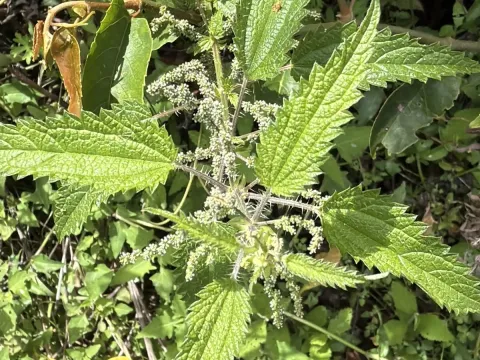
Urtica incisa
Urtica incisa
Urtica incisa, commonly known as the cut-leaf nettle, is a perennial herbaceous plant belonging to the Urticaceae family. It is a robust species adapted to various soil types and is often cultivated for its nutritional and medicinal properties.
What the section contains
Urtica incisa
Sowing should take place in early spring after the risk of severe frost has passed. Seeds are small and require a shallow planting depth, typically no more than 0.5 cm, to ensure optimal exposure to light, which triggers germination.
In field production, seeds are sown in rows spaced 50–60 cm apart. This spacing is critical to allow for adequate ventilation and to facilitate mechanical weeding and harvesting operations later in the season.
Germination typically occurs within 2 to 3 weeks if the soil temperature remains consistently above 12 degrees Celsius. During this phase, it is vital to maintain consistent soil moisture to prevent the surface from drying out.
Vegetative propagation via root division is also a viable method for establishing a crop. Segments of the rhizome are planted in late winter or early spring, allowing for faster plant establishment compared to seed sowing.
The plant thrives in fertile, moist, and well-drained loamy soils. A slightly acidic to neutral pH level is optimal for nutrient uptake, and the incorporation of organic matter before planting is highly recommended.
While Urtica incisa is shade-tolerant, maximum biomass production is achieved in sites with partial to full sunlight. However, excessive heat should be avoided, as it can cause the plant to lignify prematurely.
Water requirements are significant throughout the growing season. Implementing drip irrigation systems ensures that the soil remains adequately moist, which is necessary for the production of tender, high-quality leaves.
Fertilization with nitrogen and phosphorus is essential for vigorous growth. As a leafy crop, nitrogen is the primary driver of foliage development, though it should be applied in split doses to avoid runoff.
Maintaining soil structure through periodic aeration is necessary, as root compaction can lead to stunted growth. Frequent shallow cultivation between rows helps control weeds and enhances the overall health of the plant canopy.
The yield of Urtica incisa is heavily influenced by harvest frequency and soil fertility. Under intensive management, farmers can expect to harvest multiple cuttings throughout the summer months.
The first harvest usually occurs when the plants reach the early flowering stage. This is the optimal time, as the concentration of secondary metabolites and nutrients is at its peak in the leaves.
On average, intensive cultivation can yield approximately 15–20 tons of fresh weight per hectare. Proper management ensures that the plant regrows vigorously after each cut, sustaining production for several years.
To maximize yield, harvest should leave approximately 10–15 cm of stem above the ground. This ensures that the plant's food reserves in the roots are not exhausted and promotes rapid regrowth of new shoots.
Post-harvest handling is critical for maintaining quality. Reducing the time between cutting and processing is essential to prevent wilting and degradation of sensitive compounds within the plant tissues.
The most common disease threats include powdery mildew and various rust fungi, which often manifest in humid, overcrowded planting conditions. Improving air circulation is the best preventative strategy.
Pests such as aphids and spider mites frequently target the foliage, especially in dry conditions. Monitoring for these pests is essential, as heavy infestations can lead to significant biomass loss.
Integrated pest management (IPM) practices, such as encouraging natural predators, are preferred over chemical interventions. Keeping the crop well-watered reduces the plant's susceptibility to spider mite damage.
Crop rotation is a fundamental practice for controlling soil-borne diseases. Avoiding monoculture on the same plot for more than four or five years helps maintain the long-term health of the soil and plants.
If chemical controls become necessary, use only registered products with short pre-harvest intervals to ensure that the final product remains safe for consumption or medicinal use.
Harvesting is typically performed using mechanical forage harvesters or manual scythes. Clean cuts prevent damage to the crown of the plant, ensuring its longevity for subsequent harvests.
Harvested material should be kept in a cool, shaded environment before drying. If the material is piled too thickly, heat generated by respiration can lead to spoilage and discoloration.
Drying is performed in controlled environments at temperatures between 40 and 50 degrees Celsius. This temperature range is optimal for preserving volatile compounds while removing moisture efficiently.
Once dried, the crop is passed through a screening process to remove thick stems and debris. The refined leaves are then packed in moisture-resistant bags to prevent rehydration and fungal growth.
Properly stored, the product maintains its shelf life for up to two years. Regular quality control checks during storage are necessary to ensure the preservation of nutritional and medicinal properties.