
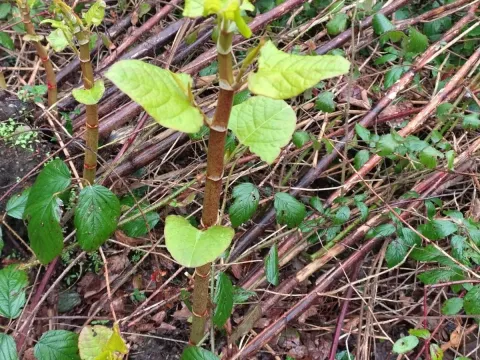
Uzen knotweed
Reynoutria uzenensis
Propagation of Uzen knotweed (Reynoutria uzenensis) is primarily achieved through vegetative methods, such as rhizome cuttings, as seeds are rarely viable for commercial cultivation.
What the section contains
Uzen knotweed
The best time for planting is early spring, ensuring the soil has sufficiently thawed and warmed up to support the rapid development of new shoots.
Rhizome fragments must be approximately 10–15 centimeters long and possess at least two healthy buds to ensure high establishment rates in the field.
Planting depth should be maintained between 10 and 12 centimeters, with spacing optimized to allow for the plant's aggressive horizontal expansion.
Given the nature of the plant, it is recommended to designate isolated areas to prevent unwanted spread into neighboring fields or ecosystems.
Reynoutria uzenensis thrives in fertile, well-drained loam soils that maintain a neutral pH and provide consistent moisture throughout the growing season.
The crop requires full sun exposure; any significant shading will drastically reduce biomass accumulation and the nutritional quality of the foliage.
Hardiness is a key feature of this species, allowing it to withstand harsh winters and variable temperatures characteristic of temperate climate zones.
Regular fertilization with organic matter is highly beneficial, particularly during the establishment phase, to sustain the high nutrient demands of the species.
Although resilient, the plant benefits from supplemental irrigation during severe summer droughts to prevent premature leaf senescence and yield loss.
Uzen knotweed is known for its high biomass production, capable of yielding up to 60 tons per hectare in optimal agricultural conditions.
The succulent stems and abundant foliage are highly valued in livestock production as a protein-rich silage component during the winter season.
Beyond its forage potential, the woody stems contain significant cellulose levels, making the biomass a viable candidate for sustainable bioenergy production.
The plant demonstrates excellent perennial performance, with stands maintaining high productivity levels for over a decade without the need for reseeding.
Efficient management of the harvest cycle allows for multiple cuts in regions with extended frost-free periods, maximizing total seasonal output.
The crop is generally resistant to major agricultural diseases, though it may occasionally be affected by aphid infestations during humid, stagnant periods.
Fungal infections of the foliage can occur if air circulation is poor, necessitating adequate spacing between rows to promote drying of the leaves.
Weed control is critical during the first year of growth, as young plants may struggle to compete with aggressive grasses and broadleaf weeds.
Root-damaging pests, such as soil-dwelling grubs, should be monitored during the initial establishment phase to prevent damage to the rhizome system.
Integrated pest management strategies are encouraged to maintain the ecological integrity of the planting site while ensuring healthy crop yields.
Harvesting for silage production is typically executed when the plants are in full bloom, which ensures a balance of volume and nutrient concentration.
Using forage harvesters with chopping capabilities is essential to process the thick stems into a consistency suitable for rapid compaction and fermentation.
Moisture content should be monitored closely during harvest to ensure that the ensiling process proceeds correctly without spoilage or mold development.
For medicinal purposes, rhizomes are harvested in late autumn after the senescence of the above-ground parts, when active compounds are most concentrated.
Following harvest, maintenance of the field involves clearing debris and providing soil nutrition to prepare the root system for the dormant period.