
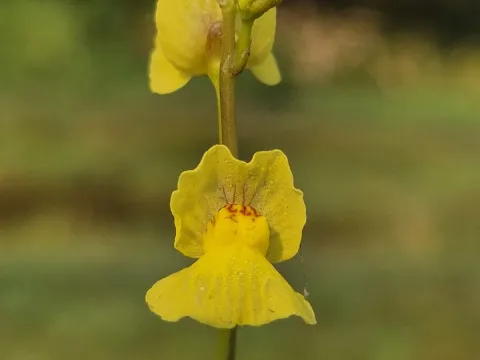
Utricularia pilosa
Utricularia pilosa
Utricularia pilosa is a remarkable aquatic plant belonging to the family Lentibulariaceae. This species is widely recognized for its specialized carnivorous nature, which allows it to thrive in nutrient-poor aquatic environments where other plants fail to survive.
What the section contains
Utricularia pilosa
While not a traditional agricultural crop, the species is of significant interest in botanical studies regarding adaptive plant physiology. It is distributed across specific tropical regions characterized by shallow, slow-moving or stagnant bodies of water.
The plant possesses a highly complex structure featuring numerous microscopic bladders. These organs function as mechanical traps, enabling the plant to capture small organisms and absorb essential nutrients like nitrogen, which are otherwise scarce in the substrate.
Optimal environmental conditions include high-quality, clear water with low salinity and a slightly acidic pH. Sunlight penetration is crucial, as the plant relies on photosynthesis for carbon fixation while supplementing its diet with captured prey.
The vegetative structure consists primarily of slender submerged stems, lacking a conventional root system. Because of this, the plant is entirely dependent on the chemical composition of the water column for its survival and growth performance.
Water pollution remains the primary threat to the stability of wild populations. Agricultural runoffs containing high levels of nitrogen and phosphorus induce eutrophication, which fosters algal blooms that drastically reduce light availability.
Habitat destruction due to land development and hydrological alterations poses a significant risk. The loss of stable wetland environments directly leads to the rapid decline of localized species that cannot adapt to terrestrial or polluted conditions.
Invasive aquatic species, such as aggressive broad-leaved hydrophytes, create intense competition for space. They outcompete Utricularia pilosa by forming dense mats on the surface, which blocks the necessary light intensity required for the plant's metabolic activity.
Pathogenic organisms, including certain aquatic fungi, can damage the delicate stems when the water quality deteriorates. These infections often lead to necrosis of the leaves and a general decline in the plant's structural integrity.
Human activities, including mechanical disturbances such as boat traffic or improper cleaning of waterways, can physically destroy the fragile colonies. Recovery from such damage is slow, as the species relies on specific environmental stability to regenerate.