
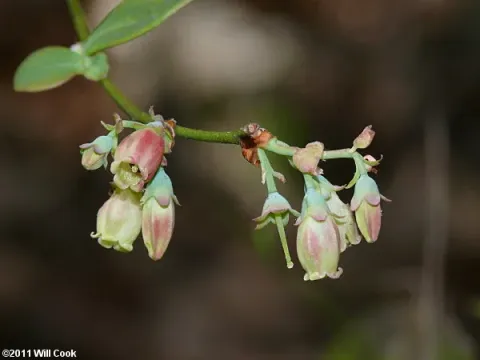
Vaccinium vacillans
Vaccinium vacillans
Vaccinium vacillans, commonly known as the late sweet blueberry, is a shrub species belonging to the Ericaceae family. It is a deciduous plant that typically grows in dry, rocky, or sandy soils, reaching a height of up to one meter.
What the section contains
Vaccinium vacillans
The plant is native to the eastern and central regions of North America. Its natural habitat includes open woods and barrens, where it thrives in acidic, well-drained soil environments, showcasing excellent drought tolerance.
Successful cultivation requires specific soil conditions, primarily an acidic pH range between 4.5 and 5.5. The site selection must prioritize full sun exposure to ensure proper flowering and fruit development throughout the growing season.
Agricultural management involves regular pruning to remove old or dead branches, which promotes new growth and better fruit yield. Amending the soil with organic matter such as peat moss or pine bark is highly recommended for optimal results.
The economic utility of the species spans from commercial berry production to its role in landscape restoration. Because of its hardy nature, it is a preferred candidate for naturalizing wild landscapes and enhancing biodiversity.
The most common disease affecting this crop is mummy berry, which causes the fruit to shrivel and become mummified. Fungicidal sprays applied during the early growth stages are essential for mitigating losses.
Pests such as blueberry maggots and aphids frequently attack the developing foliage and fruits. Integrated pest management strategies, including monitoring traps, should be deployed to reduce reliance on chemical interventions.
Botrytis blight (gray mold) can thrive during periods of prolonged spring rain. Providing adequate plant spacing and ensuring good airflow are critical cultural practices for disease prevention.
Nematodes in the soil can potentially weaken the root system of established plants. Soil testing prior to planting is a vital step to confirm the suitability of the plot and the health of the rhizosphere.
Vertebrate pests, including small rodents and deer, may browse the foliage or harvest the berries. Fencing and physical barriers are often necessary to protect the plantation during the harvest window.