
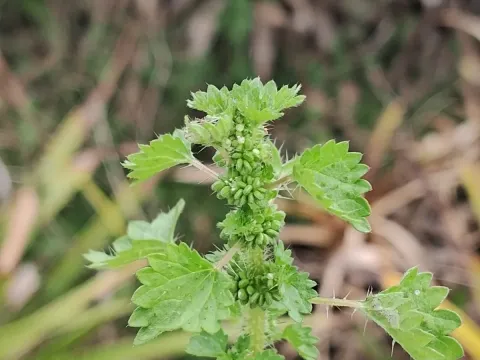
Round nettle
Urtica circularis
Sowing Round nettle, which originates from South American regions, requires strict adherence to temperature regimes. The optimal time for planting is early spring, once the soil has warmed up to 12-15 degrees Celsius.
What the section contains
Round nettle
The seeds of this crop are small, requiring shallow sowing at a depth of 1-2 centimeters. The seedbed must be prepared meticulously and cleared of weeds to ensure that young seedlings do not face competition for resources.
Pre-sowing stratification of seeds is highly recommended. This process helps overcome seed dormancy, resulting in more uniform and vigorous germination during the early stages of plant development.
Planting density depends on the intended end-use of the crop, whether for biomass production or seed harvesting. A standard planting scheme usually involves row spacing of 45-60 centimeters to facilitate mechanical maintenance.
Under greenhouse conditions, sowing times can be adjusted to allow for multiple harvests per year, provided that sufficient lighting and humidity control are maintained throughout the growing cycle.
Round nettle belongs to the Urticaceae family and thrives in well-drained, nutrient-rich soils. Loamy or sandy loam soils with a neutral or slightly acidic pH are ideal for its successful growth and development.
The plant is light-demanding, necessitating sites with excellent sun exposure for commercial production. Insufficient sunlight leads to stem stretching and a decrease in the concentration of bioactive compounds.
Moderate moisture is essential for this crop. It does not tolerate prolonged waterlogging, which promotes root diseases, but it is also sensitive to extreme drought that inhibits photosynthesis and fiber quality.
The optimal temperature range for vegetation is 18-24 degrees Celsius. Extreme temperature fluctuations or late frosts can damage tender young shoots, requiring protective agricultural measures during such periods.
Fertilization with nitrogen-based products during the active growth phase, along with phosphorus-potassium compounds during the pre-flowering stage, is recommended to maximize biomass yield and nutrient content.
The yield of Round nettle varies significantly based on soil fertility and agricultural practices. With proper care and irrigation, farmers can achieve high outputs of raw green mass per hectare.
In regions with long growing seasons, it is possible to harvest the crop twice. The first harvest is typically conducted at the budding stage to obtain the highest quality raw material.
Dry matter usually accounts for 20-25% of the fresh weight. Productivity increases significantly when crop rotation practices are followed, particularly after preceding the nettle with grain or legume crops.
To assess yield potential, specialists conduct control measurements on test plots before mass harvesting. A key quality indicator is the absence of pest damage and the overall purity of the harvested material.
The biological potential of this species is best realized when using balanced fertilizers, which stimulate lateral shoot development after the first cut, thus increasing total seasonal productivity.
Round nettle, like many members of the Urtica genus, is susceptible to powdery mildew. This fungal disease manifests as a white coating on the leaves and can reduce both the plant's health and the crop yield if not managed.
Pests such as aphids and spider mites represent the most significant threat. These insects feed on the sap of young leaves, causing deformation and reducing the commercial quality of the biomass.
Disease and pest management should prioritize biological controls to maintain the environmental safety of the raw material, which is critical for food or pharmaceutical industry applications.
Spatial isolation of nettle fields from other host plants is recommended to reduce the risk of infection spread and to minimize the impact of migratory pests on the crop.
Consistent weeding is vital during the first month of growth. Without proper weed control, the young nettle plants may be easily outcompeted, leading to thinning of the stands and loss of production.
Harvesting Round nettle is mainly conducted mechanically using forage harvesters. For food-grade production, harvesting should be performed before the onset of flowering to ensure the best leaf quality.
Special attention must be given to preserving the leaf structure, which contains the bulk of the vitamins and medicinal compounds. Harvested biomass should be transported to processing facilities immediately.
Drying must occur in shaded, well-ventilated areas or specialized drying chambers at temperatures not exceeding 50 degrees Celsius to prevent the degradation of bioactive components.
Storing the dried product requires a moisture level of 12-14%. Failure to maintain these conditions can lead to mold growth and total loss of commercial value for the batch.
After the harvest, plant residues can be incorporated into the soil as organic matter, which enhances soil structure and replenishes nutrients for the subsequent growing season.