
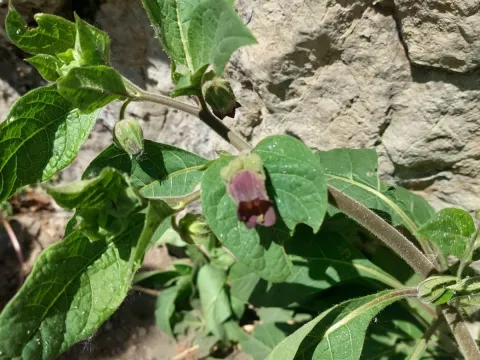
Belladonna
Atropa L.
Commercial cultivation of Belladonna (Atropa belladonna) is usually carried out via late autumn sowing or early spring planting. The seeds require a period of stratification to increase germination energy, as they possess a hard seed coat and are in a state of deep dormancy.
What the section contains

Belladonna
For spring sowing, soil preparation begins in the autumn with the application of organic fertilizers. Seed sowing depth should not exceed 1.5–2 centimeters, as the seeds are small and sensitive to soil compaction.
The optimal soil temperature for uniform seedling emergence is 18–20 degrees Celsius. Under favorable conditions, sprouts emerge within 2 to 3 weeks after sowing.
Some farms utilize seedling propagation. Seedlings are transplanted into the open field at 40–50 days old, once the threat of spring frost has passed.
The planting pattern must ensure sufficient growing space, with optimal row spacing of 60–70 centimeters and a distance between individual plants of about 40 centimeters.
Belladonna belongs to the Solanaceae family and is a perennial herbaceous plant that requires sufficient moisture and fertile soil for optimal development.
The most suitable soil types for this crop are loose, humus-rich forest or chernozem soils with a neutral or slightly acidic pH level.
The plant is light-loving, yet in the first years of life, young plantations require some shade, as intense direct sunlight can inhibit the growth of the aerial parts.
Climate requirements include moderate warmth and stable irrigation. Belladonna tolerates neither prolonged drought nor waterlogging, which can lead to root rot.
The crop responds well to nitrogen and potassium fertilizers, which stimulate the accumulation of active alkaloids in the leaves and roots of the plant.
The yield of Belladonna depends on the age of the plantation, the agrotechnical background, and the climatic conditions of the cultivation region.
In the first year of vegetation, the yield of green mass is relatively low as the plant directs most of its resources toward root system establishment.
The highest productivity rates are achieved in the 3rd or 4th year of the bush's life, when the plant is fully mature and capable of multiple harvests per season.
The average yield of dried leaves with proper care can range from 10 to 15 centners per hectare of plantation.
The maximum content of active substances (atropine, hyoscyamine) is recorded during the peak flowering period, which is the primary indicator for commencing harvest.
Belladonna is susceptible to fungal diseases such as powdery mildew, which is particularly active in conditions of high humidity and dense planting.
Root rot is among the most dangerous diseases, often occurring due to stagnant water in the root zone or poor crop rotation management.
Among pests, the Colorado potato beetle and various species of aphids cause the most damage by feeding on the sap of young leaves and shoots.
Insecticides are used for pest control during the active growth period, but chemical treatments must be suspended at least 30 days before harvest.
Adhering to strict crop rotation and timely weeding significantly reduces the risk of epiphytotics and the spread of pests throughout the plantation.
Harvesting Belladonna raw material is a process that requires strict adherence to schedules to ensure the quality of the pharmaceutical product.
Leaves are collected during the flowering phase, when the concentration of alkaloids in plant tissues reaches its peak.
Harvesting is carried out in dry weather by cutting the leaves manually or mechanically, taking care not to damage the stems if a second harvest is planned.
The collected material must be transported to the drying area quickly, as delays lead to self-heating, leaf darkening, and the loss of pharmacological properties.
Drying is performed in specialized dryers at a temperature of 40–50 degrees Celsius, allowing the enzymatic processes to stop promptly and preserving the active components.