
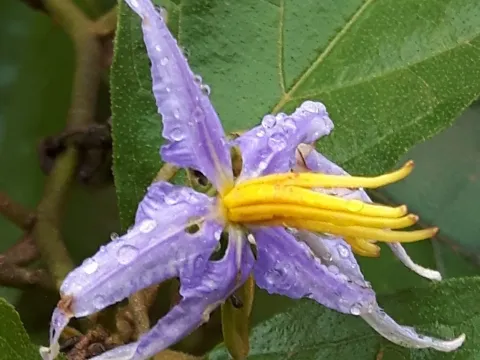
Solanum subinerme
Solanum subinerme
Solanum subinerme is a woody perennial shrub belonging to the diverse Solanaceae family. Originating from the tropical regions of South America, this plant is primarily found in the Amazon basin, thriving in moist forest understories and disturbed habitats.
What the section contains
Solanum subinerme
The cultivation of this species requires tropical climatic conditions characterized by consistently high temperatures throughout the year. It lacks cold hardiness and must be protected from any temperatures approaching freezing, which are lethal to the plant.
In terms of soil requirements, the plant prefers well-drained, fertile substrates that are rich in organic matter. While it adapts to various soil types, maintaining a slightly acidic pH and preventing waterlogging are critical for healthy root development.
Agricultural management involves regular irrigation to maintain high soil moisture levels, especially during the dry season. The plant responds well to balanced nutrient applications, which support the development of its dense foliage and reproductive structures.
The morphology of the plant includes simple leaves and branching patterns that require sufficient spacing to ensure adequate light penetration and air circulation. Its rapid growth phase is highly dependent on both light availability and moisture content in the soil.
Like many members of the Solanum genus, this plant is susceptible to common pests such as aphids and whiteflies, which tend to infest the soft tissue of developing shoots.
Fungal infections, particularly powdery mildew, often become an issue when humidity is high and the environment lacks proper air movement between individual plants.
Root rot is a significant risk in poorly drained soils, making the selection of the planting site or the use of raised beds essential for long-term health.
Spider mites can occur during periods of high heat and low humidity, causing premature leaf drop and weakening the overall vigor of the plant specimen.
Integrated pest management strategies are recommended, focusing on biological controls and regular monitoring to detect early signs of infestation before significant damage occurs.