
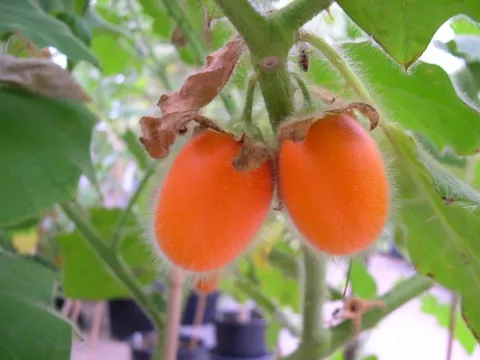
Solanum pectinatum
Solanum pectinatum
Sowing of this crop is performed primarily in protected ground or greenhouses, as the plant requires a long frost-free period to complete its life cycle. Seeds are germinated at temperatures between 22 and 25 degrees Celsius, maintaining stable substrate moisture.
What the section contains
Solanum pectinatum
In temperate climates, sowing in open ground is not recommended until stable warm weather is established, as even mild frosts can be lethal to young seedlings. The most effective method is cultivating through 60-day-old transplants.
Seed preparation involves soaking in growth stimulants to improve germination rates, considering the hard seed coat typical of the species. Pricking out is performed at the two-leaf stage into individual containers.
Transplanting to the permanent site follows a scheme that ensures sufficient feeding area for the developing root system. A spacing of at least 60-80 centimeters between plants is recommended to prevent overcrowding.
Hardening the transplants for two weeks before final planting is a crucial step to allow the plant to adapt to natural outdoor conditions and varying levels of solar radiation.
As a member of the Solanaceae family, the crop prefers fertile, well-drained loamy soils with a neutral to slightly acidic pH. A high level of organic matter in the soil is a key condition for successful growth.
The plant is photophilic and requires full sun exposure throughout the entire growing season. Insufficient light leads to stretched stems and significantly delays the processes of flowering and fruit set.
The optimal air temperature for active growth ranges from 20 to 30 degrees Celsius. Sudden temperature fluctuations can lead to blossom drop and partial loss of the fruit set.
Soil moisture requirements are moderate; the plant does not tolerate waterlogging, which quickly leads to root rot. However, during the peak fruiting phase, consistent irrigation is necessary.
For intensive growth, regular application of complex fertilizers with high potassium and phosphorus content is recommended, which supports the plant's immune system and yield quality.
The total yield depends on light quality and systematic agronomic care, including fertilization and timely irrigation. Under favorable conditions, the plant produces an abundance of fruits with a unique aroma.
Yield potential is closely linked to correct plant training. Removing suckers (side shoots) allows nutrients to be redirected toward fruit formation, significantly increasing the harvest per bush.
The fruits have a dense structure, which simplifies transportation and long-term storage. Product quality is evaluated based on color uniformity and skin integrity, which protects the fruit from damage.
Stable harvesting continues for several months until the arrival of autumn cold. For maximum output, it is essential to collect mature fruits timely to avoid over-ripening on the plant.
Using modern industrial growing techniques and precise fertigation regimes allows yield indicators to reach high values consistent with the standards for this type of crop.
Like all solanaceous crops, this plant is prone to late blight, especially in high-humidity conditions with poor air circulation. Preventative treatment with bio-fungicides is highly recommended.
Among pests, aphids and spider mites represent the greatest threat, as they colonize the undersides of leaves rapidly. Pest management should be proactive rather than reactive.
The Colorado potato beetle is a serious adversary capable of destroying significant portions of green mass quickly. Regular field inspections and hand-picking larvae are mandatory control measures.
Viral diseases, such as mosaic, can lead to leaf deformation and reduced productivity. The spread of these viruses often occurs via insect vectors, making vector control a priority.
- Crop rotation is a fundamental measure for disease prevention.
- Disinfecting the soil before transplanting significantly lowers infection risk.
- Greenhouse ventilation prevents the creation of favorable environments for pathogens.
Harvesting begins once the fruits reach their characteristic color and size. Mature fruits are easily separated from the peduncle with a slight twist or light pressure.
It is recommended to carry out the harvesting process during the morning hours when the fruits are most turgid. This minimizes physical damage to the produce during collection.
Avoiding damage to the plant structure during harvest is vital, as any wounds serve as entry points for secondary infections. Using a clean pruner or sharp knife is advisable.
After harvest, fruits should be placed in a cool, shaded area for immediate cooling. This extends their shelf life significantly before processing or distribution.
The harvested yield is sorted by size and maturity, allowing quality products to be separated from defective ones for further long-term storage or shipment.