
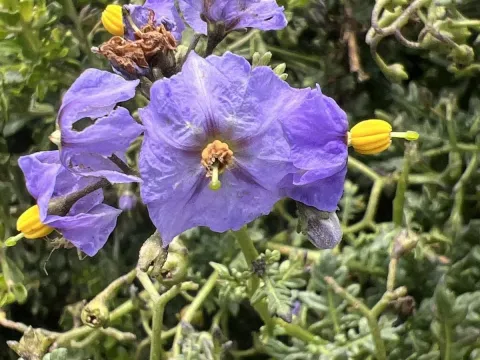
Solanum pinnatum
Solanum pinnatum
Solanum pinnatum is a unique member of the Solanaceae family, closely related to widely cultivated crops like potatoes and tomatoes. Its biological profile makes it a subject of interest for both botanical research and crop development.
What the section contains
Solanum pinnatum
Native to the Andean highlands, this species is adapted to cooler climates and high-altitude conditions. Understanding its origin is crucial for successful cultivation, as it requires specific thermal regulation.
Sowing should be done in prepared seed trays with well-drained, sterile substrate. The seeds have a relatively high germination rate if kept under stable temperatures ranging from 18 to 22 degrees Celsius.
Young seedlings require significant light exposure immediately after germination. Supplemental LED lighting is recommended if natural sunlight is insufficient during the early growth stages in winter or spring.
Transplanting occurs after the development of true leaves. Careful handling of the root system is essential, as the species can be sensitive to root disturbance during the transfer to the main field or greenhouse.
The plant thrives in fertile, loamy soils that possess excellent drainage properties. A slightly acidic to neutral pH level is ideal for nutrient uptake, particularly for trace elements required for fruit development.
Water requirements include regular, deep irrigation rather than frequent surface wetting. Maintaining consistent soil moisture helps prevent stress-related issues, such as blossom drop or fruit cracking.
Temperature management is the most critical aspect of cultivation. The plant performs best in moderate climates and may require shade or advanced ventilation systems if ambient temperatures exceed 28 degrees.
Nutrient management involves applying balanced fertilizers during the vegetative stage, transitioning to higher potassium content during the flowering and fruiting periods to support high-quality yield.
Proper air circulation is necessary to prevent humidity buildup within the plant canopy. Spacing plants adequately ensures that airflow reduces the risk of fungal proliferation on leaves and stems.
Solanum pinnatum is primarily valued for its role in genetic research. Breeders utilize its wild traits to confer resistance to environmental stressors to commercial tomato and potato varieties.
While not a traditional broad-acre crop, its fruits are studied for specialized biochemical properties, including unique alkaloids that could have applications in pharmaceuticals or food technology.
Yield estimation depends heavily on the specific environment and the degree of cultivation intensity. Greenhouse cultivation consistently produces higher yields compared to open-field conditions due to controlled variables.
Harvesting strategies are based on physiological ripeness. Since the crop is not yet widely commercialized, picking techniques focus on preserving the integrity of individual fruits for laboratory analysis.
Future potential for this crop lies in its ability to adapt to marginal soils where traditional crops might fail. Continued research will clarify its full economic impact on specialized agricultural markets.
Common nightshade pests pose a significant risk to Solanum pinnatum. Aphids, whiteflies, and Colorado potato beetles are frequent threats that must be managed through integrated pest management (IPM) strategies.
Fungal diseases such as late blight (Phytophthora infestans) are particularly dangerous in humid climates. Prevention includes avoiding overhead irrigation and ensuring leaves dry quickly after morning dew.
Root pathogens and wilt-causing fungi are persistent threats in poorly drained soils. Crop rotation is essential to break the infection cycle of soil-borne diseases and maintain overall field health.
Virus transmission by insect vectors remains a major challenge. Maintaining a clean field environment by removing weeds that act as alternative hosts is a standard practice for ensuring crop longevity.
- Use disease-free seed stock;
- Monitor pest populations weekly;
- Ensure proper spacing for light penetration;
- Sanitize tools after working with infected plants;
- Monitor soil nutrient levels regularly.
Harvesting is performed manually to ensure only mature fruits are collected. Careful picking prevents physical damage to the plant, which is vital for maintaining the plant's health for subsequent fruit sets.
Post-harvest handling involves sorting fruits by quality and size. Immediate cooling in storage areas significantly extends the shelf life and preserves the integrity of biochemical markers within the fruits.
Processing methods for the harvest may include drying or specialized extraction techniques if the goal is the recovery of valuable plant compounds. Drying should be done in controlled, well-ventilated settings.
Disposal of crop residues is a critical step in field management. Removing and destroying infected plant debris reduces the inoculum for future disease cycles in the next growing season.
Documenting yield results and harvest timing provides valuable data for agronomists, helping to optimize cultivation practices and improve overall output in subsequent cycles of growth.