
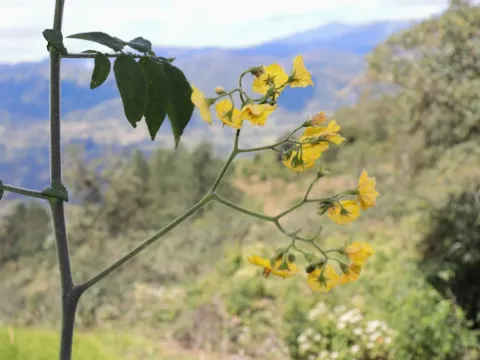
Solanum ochranthum
Solanum ochranthum
Solanum ochranthum is a high-altitude species belonging to the Solanaceae family, known for its unique botanical profile. In agricultural practice, seed sowing typically begins in a controlled environment, such as a greenhouse or a nursery bed, during late winter.
What the section contains
Solanum ochranthum
The seeds require a warm environment, ideally between 20 and 25 degrees Celsius, to ensure a high germination rate. Using a well-aerated seed starter mix is crucial for healthy root development during the initial growth phase.
Seedlings should be thinned or transplanted into individual pots once they reach a height of approximately 5-10 centimeters. This reduces competition for nutrients and ensures the development of a robust root system.
Before transplanting outdoors, the plants must undergo a hardening-off process. This involves gradually exposing them to outdoor temperatures and light conditions over a period of seven to ten days to prevent transplant shock.
The timing of the final move to the field is critical. The soil temperature should be consistently warm, and the risk of frost must be completely eliminated to ensure the plant establishes itself successfully.
This crop thrives in conditions that provide ample sunlight. Full sun exposure is essential for the photosynthetic efficiency required to produce mature fruit and maintain plant vitality throughout the growing season.
Soil requirements focus on fertility and drainage. A sandy loam or silty soil that is rich in organic matter and maintains a slightly acidic to neutral pH is ideal for promoting vigorous vegetative growth.
Temperature management plays a major role in yield. The plant is best adapted to moderate temperatures; extreme heat can cause flower drop, while prolonged cold can lead to metabolic dormancy and stunted development.
Watering strategies should be consistent but cautious. While the plant requires enough moisture to support fruit formation, saturated soil can lead to anaerobic conditions that quickly compromise the root system.
Proper spacing is a vital agronomic requirement. Providing adequate room for air circulation between plants helps to manage microclimatic humidity, which is a major factor in preventing fungal outbreaks.
Like many members of the Solanaceae family, Solanum ochranthum is susceptible to blight and various fungal pathogens. Monitoring for early signs of lesions on foliage is an essential part of an integrated pest management strategy.
Insect pests, including aphids, whiteflies, and potato beetles, are common threats that can spread viruses or physically damage the plant. Early detection and the application of appropriate biological or chemical controls are recommended.
Root rot caused by pathogens like Phytophthora or Pythium can occur if the field drainage is insufficient. Improving soil structure and avoiding overhead irrigation during humid weather can mitigate these risks significantly.
Nutritional deficiencies, especially in micronutrients, can weaken the plant and make it more susceptible to opportunistic diseases. Balanced fertilization programs based on regular soil testing are standard best practice.
- Implementing strict crop rotation schedules to break pathogen lifecycles.
- Maintaining field cleanliness by removing plant debris after the harvest.
- Using preventative biological fungicide sprays during high-risk weather patterns.