
Duboisia hopwoodii
Duboisia hopwoodii
Description
Growing requirements
Duboisia hopwoodii is a perennial shrub or small tree belonging to the Solanaceae family. This plant is endemic to Australia and primarily thrives in the arid interior regions of the continent.
For successful cultivation, the crop requires a hot, arid climate with high insolation. The plant is extremely drought-resistant and capable of withstanding extreme temperature fluctuations typical of desert zones.
Soil preferences include well-drained sandy or loamy soils with low organic content. An essential requirement is the absence of water stagnation, as the root system is sensitive to excessive moisture and fungal infections.
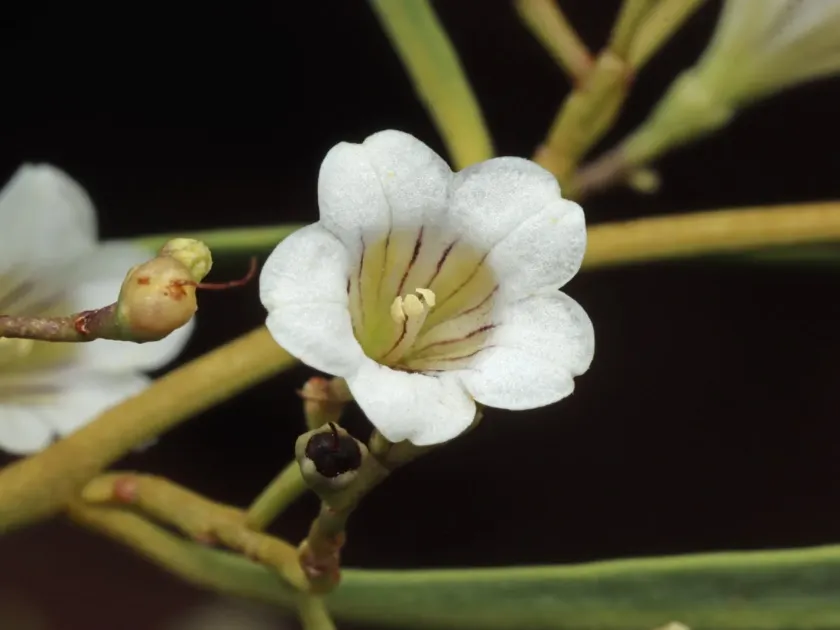
Botanically, the species appears as a branched shrub with narrow lanceolate leaves and small white or cream-colored flowers. The leaves contain specific alkaloids, notably nicotine and nornicotine, which make it a subject of industrial interest.
The economic use of Duboisia is focused exclusively on the pharmaceutical industry. The leaves of the plant are harvested for the extraction of alkaloids, which are used as active pharmaceutical ingredients for medical purposes.
Main diseases and pests
In its natural habitat, Duboisia is virtually free from specific epiphytotics, but when introduced to commercial plantations, it can suffer from root rots.
The primary threats to the crop are sucking pests, such as aphids and spider mites, which can act as vectors for viruses affecting plants of the Solanaceae family.
Excessive humidity in the root collar zone often triggers the development of pathogens of the genus Fusarium, which leads to the death of young seedlings during the acclimatization period.
At early stages of development, seedlings may be damaged by soil nematodes, requiring agronomic measures for substrate preparation and disinfection.
Control of diseases and pests on commercial plantations is primarily conducted through preventive monitoring and strict irrigation management, as chemical treatments can adversely affect the alkaloid composition.