
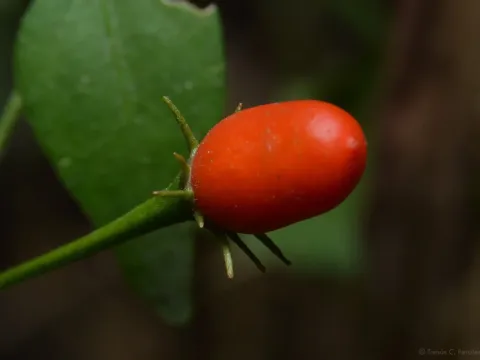
Chaco chili
Capsicum chacoense
Chaco chili is a wild species that typically requires a period of scarification or patience to ensure successful germination of its seeds.
What the section contains
Chaco chili
The sowing process begins indoors during mid-winter to allow the plants sufficient time to establish strong root systems before outdoor transfer.
Use a sterile, well-draining seed-starting mix and maintain a consistent soil temperature of at least 25 degrees Celsius for best results.
Seeds should be covered with a fine layer of vermiculite or soil, keeping them moist but not waterlogged throughout the germination phase.
Once seedlings have developed at least two sets of true leaves, they should be carefully transplanted into larger pots to prevent overcrowding.
This crop belongs to the Solanaceae family and is native to the Chaco region of South America, favoring hot and semi-arid climates.
It thrives in full sun and requires soil that is rich in organic matter, well-structured, and capable of maintaining proper nutrient balance.
Regarding irrigation, while the plants are somewhat drought-tolerant, consistent moisture is necessary to maximize both growth and fruit yield.
Adequate spacing is crucial as the plants can grow quite vigorously under favorable conditions, often becoming large, spreading bushes.
Regular fertilization with balanced nutrients ensures that the plant has enough energy to produce its characteristic small, pungent berries.
Common agricultural threats include aphids, whiteflies, and spider mites, which can easily infest the plant in warm, sheltered environments.
Fungal issues like damping-off can affect young seedlings if the humidity is too high and air circulation is poor during the early stages.
Root rot is a significant danger in heavy, water-saturated soils, emphasizing the need for excellent drainage systems in the field or greenhouse.
Integrated pest management, including the use of neem oil or biological controls, is highly recommended to keep populations under control.
Virus transmission by insect vectors remains a major challenge, requiring growers to monitor their fields closely and remove infected plants.
Harvesting usually occurs in late summer or autumn when the berries reach their peak color, indicating full maturity and flavor intensity.
Because the fruits are quite small, hand-picking is the only viable method for collection, requiring significant labor at the end of the season.
Continuous harvesting promotes the plant's health and can lead to a secondary wave of fruit production if the climate remains warm enough.
Post-harvest handling involves drying the peppers in a well-ventilated area or using low-heat dehydration to preserve their chemical profile.
The dried berries can be ground into a potent spice, which is the primary form of commercial use for this unique South American chili species.