
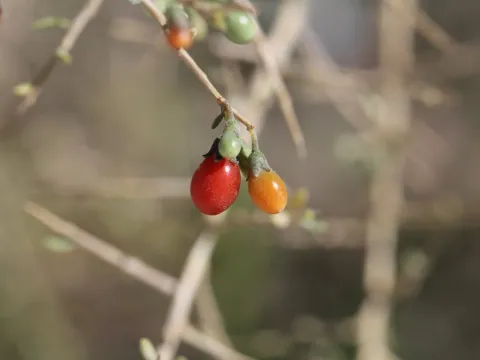
Chilean Lycium
Lycium chilense
Chilean Lycium (Lycium chilense) is a perennial shrub belonging to the Solanaceae family. This species is native to the arid regions of South America, specifically Chile and Argentina, where it has adapted to survive in harsh, moisture-deficient environments.
What the section contains
Chilean Lycium
The plant is a robust, branching shrub that can reach significant heights depending on the environmental conditions. Its primary habitat includes stony, sandy, and alkaline soils, demonstrating a high tolerance for poor substrate conditions and environmental stress.
Botanically, the species is characterized by thorny branches and small, greyish-green leaves that reflect sunlight and reduce transpiration. This adaptation allows the plant to maintain physiological processes even during prolonged periods of high heat and drought.
For cultivation, this plant requires full sun exposure and excellent drainage. It is poorly suited to high-humidity climates, as it has evolved specifically for arid zones, making it an excellent candidate for xeriscaping or sustainable landscaping projects.
Beyond its ecological role in preventing soil erosion, the plant has a history of ethno-botanical use. The berries produced by this species are studied for their potential nutritional content, similar to other members of the Lycium genus.
Despite its natural hardiness, Chilean Lycium is susceptible to various pests, particularly spider mites during exceptionally hot and dry seasons. These insects thrive in arid environments and can cause significant foliage damage if left unchecked.
Fungal infections are a serious threat only when the plant is exposed to excessive soil moisture or poor ventilation. Root rot is the most common condition leading to the decline of the plant, often caused by inadequate drainage and waterlogging.
As a member of the Solanaceae family, it can also host pests common to tomatoes and potatoes, such as whiteflies or certain species of leaf-chewing beetles. Implementing crop rotation or isolating it from other solanaceous crops is recommended.
Viral pathogens may cause mosaic patterns on the leaves, which can severely weaken the plant over time. Because there are no effective chemical cures for viral infections, prevention through sanitation and pest control is vital.
Maintenance involves routine pruning to improve airflow through the canopy, which effectively reduces the risk of fungal buildup. Careful monitoring of the leaf underside is the best way to catch potential pest infestations early in their cycle.