
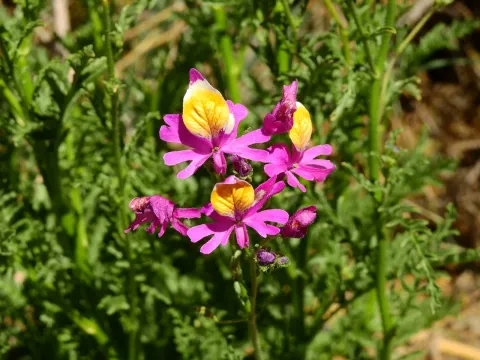
Schizanthus retusus
Schizanthus retusus
Schizanthus retusus, commonly known as the poor man's orchid, is an annual flowering plant belonging to the Solanaceae family. Native to Chile, this species is highly valued for its striking, multi-colored flowers featuring complex spots and intricate patterns.
What the section contains
Schizanthus retusus
The cultivation process typically begins with indoor sowing in late winter. Seeds are very small and should be surface-sown on a fine, well-drained seed-starting mix, then lightly pressed into the soil to ensure proper contact without burial.
A consistent temperature range of 15-20 degrees Celsius is optimal for germination. Keeping the substrate moist is vital, but growers must prevent the soil from becoming waterlogged, as young seedlings are particularly prone to damping-off.
Seedlings should be transplanted into larger pots once they develop their first set of true leaves. Careful handling of the root system is crucial, as this species does not respond well to root disturbance during the transplanting process.
Acclimatization to outdoor conditions is necessary before final planting. Hardening off the plants over several days will help them adapt to external temperatures and light levels, ensuring better establishment in the garden bed.
This species thrives in cool, moist climates that mimic its native high-altitude habitat. It performs best in areas with moderate temperatures, as extreme summer heat can significantly shorten its blooming season and cause stress.
Full sun to partial shade is the ideal environmental condition for growth. In hotter climates, afternoon shade is highly recommended to protect the foliage from scorching and to maintain the vibrant colors of the delicate petals.
Soil requirements focus on fertility and drainage. A rich, loamy soil with a neutral pH is preferred; if the natural soil is heavy, the addition of organic matter or perlite can significantly improve aeration and root development.
Watering must be frequent but disciplined. The soil should remain evenly moist; inconsistent moisture levels can cause the plant to drop its buds prematurely, reducing the overall visual impact of the flowering display.
Regular fertilization with a balanced, water-soluble fertilizer helps maintain strong growth. A formula with slightly lower nitrogen content during the flowering stage will encourage more blooms rather than excessive vegetative growth.
Root rot remains the most significant threat to Schizanthus retusus, often caused by overwatering or poor drainage. Using sterilized potting soil and ensuring pots have adequate drainage holes are the best preventive measures.
Aphids are the most common insect pest. They tend to cluster on soft new growth and flower buds, weakening the plant. Regular monitoring and the application of insecticidal soaps can manage small infestations effectively.
Spider mites can also become a problem in dry, warm conditions. Signs of infestation include fine webbing and stippling on the leaves, which can be mitigated by increasing humidity and using targeted acaricides.
Powdery mildew is a fungal issue that occurs in poorly ventilated areas. Keeping foliage dry and maintaining proper spacing between plants is essential to ensure adequate airflow and reduce the humidity levels that favor fungal growth.
Integrated pest management, which includes removing infected plant debris and keeping the growing area clean, is fundamental. Early detection allows for immediate intervention, preserving the health and appearance of the entire planting area.