
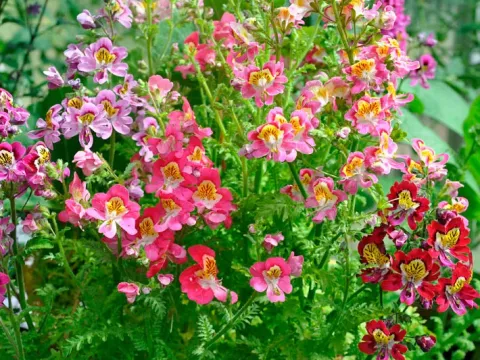
Schizanthus hybrids
Schizanthus hybrids
Schizanthus hybrids, belonging to the Solanaceae family, are stunning annuals originating from the mountainous regions of Chile. They are well-known for their unique, orchid-like flowers and are often called the poor man's orchid.
What the section contains
Schizanthus hybrids
For best results, seeds should be sown indoors in February or March. Use a loose, well-draining seed-starting mix and sow the seeds shallowly, as they require light to germinate effectively.
Maintain a germination temperature of 18-20 degrees Celsius. Once seedlings emerge, reduce the ambient temperature to around 12-15 degrees to encourage strong, stocky growth and prevent leggy stems.
Transplant the seedlings carefully once they develop their first true leaves. It is crucial to minimize root disturbance during this process to ensure the plants establish well after moving to the garden.
Pinching the growing tips of young plants is essential for creating a bushy habit. This simple technique encourages lateral branching and leads to a significantly higher number of flower clusters during the season.
Schizanthus hybrids thrive in cool, sunny positions. In warmer climates, it is vital to provide them with light afternoon shade to protect them from heat stress, which can cause the plants to wilt.
Soil requirements include high fertility and excellent drainage. The plant is highly sensitive to waterlogged conditions, which will quickly lead to root rot and total plant failure.
Watering should be consistent, keeping the soil moist but never saturated. In the heat of summer, extra care should be taken to ensure the plants have adequate moisture without creating soggy conditions.
Fertilize the plants every two weeks using a balanced liquid fertilizer designed for flowering annuals. High-phosphorus formulas will help support continuous blooming throughout the season.
The ideal environment for this species is a sheltered spot with good air circulation. Strong winds can damage the delicate stems, so choosing a protected location in the garden is highly recommended.
Common pests include aphids and whiteflies, which tend to congregate on the undersides of leaves. These pests weaken the plant and can transmit viral diseases if left unchecked.
Root rot, caused by excessive moisture or heavy soil, is the most common and fatal condition for this plant. Proper drainage and careful watering are the only effective preventive measures.
Powdery mildew can appear during humid conditions or if the plants are crowded together. Ensuring adequate spacing between plants significantly reduces the risk of fungal infections.
Early intervention is key when dealing with insect infestations. Using insecticidal soaps or neem oil is usually effective and safer for the delicate foliage of the Schizanthus.
Inspect plants regularly for signs of stress or yellowing foliage. Removing infected parts promptly helps maintain the overall health and vigor of your floral display.