
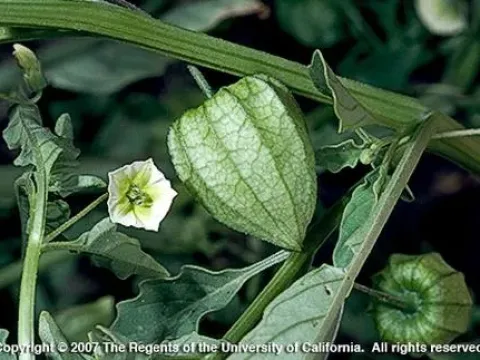
Lancet-leaved groundcherry
Physalis lancifolia
Physalis lancifolia, belonging to the Solanaceae family, is an annual plant that requires a warm climate for optimal development. Due to its long vegetation period, it is standard practice to start the crop indoors in trays or pots.
What the section contains
Lancet-leaved groundcherry
Seeds should be sown 6 to 8 weeks before the last expected frost in late spring. Use a sterile, well-draining seed-starting mix and cover seeds lightly with soil, maintaining a temperature between 22°C and 25°C.
Seedlings benefit from high light intensity to prevent legginess. Once the first true leaves emerge, transplant the seedlings into individual containers to allow for root expansion before the final move to the garden.
Hardening off is a critical stage for Physalis lancifolia. Exposing young plants to outdoor conditions gradually over a week helps them adapt to wind and direct sunlight, ensuring higher survival rates.
Transplanting to the final site should occur only when the soil has thoroughly warmed up. Placing the plants in well-prepared beds ensures they establish quickly and begin flowering as soon as the day temperatures stabilize.
This species thrives in sunny locations with protection from strong winds. A site that receives at least 6–8 hours of direct sunlight is essential for productive flowering and fruit maturation.
The soil should be fertile, sandy loam with a pH level between 6.0 and 7.0. Proper drainage is crucial, as Physalis species are highly susceptible to root rot if waterlogged for extended periods.
Regular irrigation is necessary throughout the growing season, especially during the fruit-set stage. However, it is important to water at the base of the plant to keep foliage dry, reducing the risk of fungal infections.
Temperature management is vital; plants perform best within a range of 20°C to 28°C. If temperatures remain too high for extended periods, pollination efficiency may drop, leading to blossom drop.
Mulching is a highly recommended practice for this crop. Applying organic straw or compost around the plants helps suppress weeds, maintains soil moisture uniformity, and prevents soil-borne diseases from splashing onto leaves.
Common pests include aphids, whiteflies, and the Colorado potato beetle. Integrated pest management, such as the use of yellow sticky traps or botanical insecticidal soaps, is often sufficient for small-scale production.
Fungal diseases like late blight and early blight pose the most significant threat to Physalis lancifolia. These pathogens thrive in stagnant, humid conditions, making spacing and airflow vital components of management.
Crop rotation is the most effective cultural control method. Avoid planting groundcherries in areas where other solanaceous crops like peppers or tomatoes were grown in the previous three years to prevent soil pathogen build-up.
Providing adequate support using cages or stakes can improve airflow and keep fruit off the soil, which significantly reduces the risk of spoilage and infection during the late stages of growth.
Regular monitoring of the underside of leaves for early signs of pests or disease is recommended. Removing and disposing of infected plant material immediately can help prevent the spread throughout the entire plot.
Harvesting Physalis lancifolia typically begins when the husks become papery and begin to turn brown or yellow. The fruit inside will have shifted to a mature color, indicating peak sugar and flavor development.
Fruits should be harvested carefully by picking the entire husk-covered berry. Keeping the husk intact is essential for post-harvest storage, as it acts as a natural protective barrier against mechanical injury.
For best results, harvest during dry weather. Avoid picking fruit when wet, as excess moisture trapped within the husk can lead to the development of mold and premature decay in storage.
Post-harvest, the fruits can be spread out in a single layer in a cool, well-ventilated area to cure. This process extends the shelf life and allows for even ripening of fruits collected at slightly different stages.
The culinary versatility of this groundcherry is vast. It is frequently used in fresh salads, baked goods, jams, and piquant salsas. The flavor profile is often described as complex, balancing acidity and sweetness perfectly.