
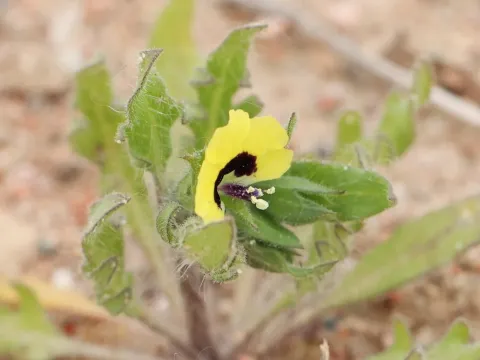
Little henbane
Hyoscyamus pusillus
Little henbane is an annual herb from the Solanaceae family. It is a highly specialized plant that thrives in arid climates, completing its entire lifecycle in a relatively short period.
What the section contains
Little henbane
The seeding process is primarily managed by natural dispersal, as the plant produces numerous seeds that remain viable in the soil for several seasons, waiting for optimal humidity.
When grown for scientific or medicinal purposes, seeds are sown in early spring in well-prepared, loose substrate. The seeds require light for germination and should be covered only very thinly.
Young plants develop a distinct rosette of leaves, which allows for efficient photosynthesis before the rapid elongation of the floral stems.
Due to its high concentration of alkaloids, agricultural management focuses on preventing its spread, as it is considered an invasive weed in many grazing regions.
This species is highly adapted to extreme conditions, preferring semi-desert environments and stony soils. It requires full exposure to direct sunlight for healthy development.
Soil requirements are relatively low; the plant prefers light, sandy, or rocky soil with excellent drainage. It does not tolerate heavy or waterlogged soils, which lead to root rot.
Climate tolerance includes the ability to withstand high temperatures and low rainfall. It is an excellent example of an xeric-adapted plant within the Solanaceae family.
Regular maintenance involves ensuring the soil remains dry between waterings. Fertilization is generally not necessary, as the plant is efficient at nutrient uptake in poor soils.
Competitive management is key; as a weed, it can quickly colonize bare ground, so ensuring a thick cover of beneficial plants helps suppress its germination.
The plant is susceptible to various fungal pathogens that thrive in damp conditions, specifically powdery mildew which can affect the leaves during rainy spells.
Root diseases, caused by pathogens like Pythium or Phytophthora, are a major threat if soil drainage is compromised. These can cause total plant collapse within days.
Pests that target Solanaceae, such as aphids and leafhoppers, can cause significant damage by feeding on the sap and transmitting viral diseases to the plant.
The toxins present in the plant serve as a defense mechanism against many generalist herbivores, but certain specialized insects can bypass these defenses.
- Powdery mildew
- Root rot
- Aphids
- Whiteflies
The harvesting stage is critical and must coincide with the peak flowering period to ensure the highest yield of alkaloids for potential pharmacological use.
Strict safety protocols must be followed during harvesting. Gloves and protective clothing are mandatory to prevent accidental poisoning from the plant's potent compounds.
The harvested plant material is spread out in a thin layer in a well-ventilated, shaded drying area. Rapid drying is essential to prevent mold and ensure the stability of the active components.
Once dried, the herb is stored in opaque, airtight containers. Proper labeling as a toxic substance is necessary to ensure safety and prevent misuse in any setting.
Post-harvest management involves the removal and destruction of all residual plant matter to prevent accidental ingestion by livestock or unauthorized wildlife contact.