
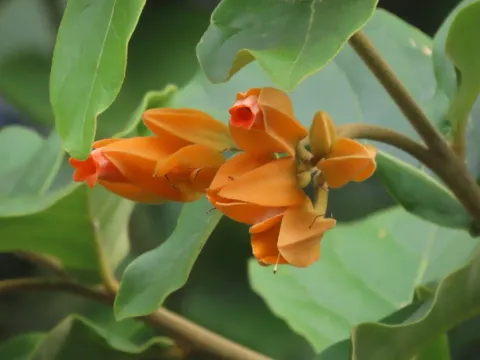
Juanulloa
Juanulloa aurantiaca
Juanulloa aurantiaca is an epiphytic shrub belonging to the Solanaceae family, commonly propagated via stem cuttings to ensure genetic consistency.
What the section contains
Juanulloa
The optimal time for taking cuttings is late spring, allowing the plant to utilize its natural growth spurt during the warmer months.
Cuttings should be placed in a well-draining, lightweight media such as a mix of peat and perlite, ensuring high humidity levels for rooting.
Seed propagation is possible but less frequent, requiring fresh seeds planted in warm conditions to maintain viability and promote germination.
Young plants require consistent monitoring of moisture levels to prevent root desiccation while they establish a robust root system.
Native to the tropical rainforests of Central and South America, Juanulloa thrives in environments that mimic its natural habitat.
The plant requires bright, indirect light; direct sunlight may damage the foliage, while insufficient light will lead to poor flowering.
A potting mix rich in organic matter, such as bark, sphagnum moss, and leaf mold, is essential for mimicking its epiphytic growth habit.
Temperature management is critical; this species does not tolerate frost and prefers constant temperatures between 18 and 26 degrees Celsius.
High relative humidity is crucial for the health of the foliage, necessitating regular misting or the use of humidity trays in indoor settings.
Common indoor pests including spider mites, mealybugs, and scale insects frequently target Juanulloa aurantiaca.
Spider mites are especially prevalent in dry indoor environments and can quickly weaken the plant if not controlled through increased humidity or miticides.
Root rot is a major physiological threat often caused by overwatering or poor drainage in the potting container, leading to rapid decline.
Integrated pest management, including regular inspection of the underside of leaves and stems, is recommended for early detection.
Fungal infections can be minimized by ensuring adequate air circulation around the canopy and avoiding wetting the leaves during late evening hours.