
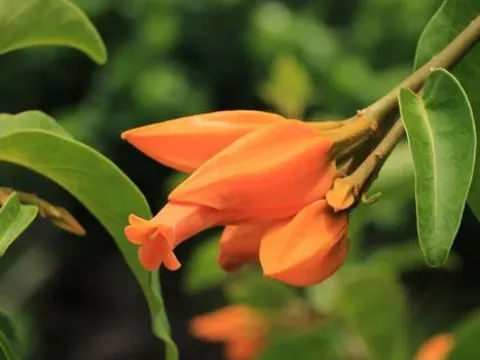
Juanulloa mexicana
Juanulloa mexicana
Juanulloa mexicana is a fascinating evergreen shrub or vine belonging to the Solanaceae family. Native to the tropical forests of Mexico and Central America, it often exhibits epiphytic characteristics, growing in the canopy of larger trees in its natural environment.
What the section contains
Juanulloa mexicana
The plant is widely recognized for its striking, waxy, tubular orange-yellow flowers enclosed in distinct, inflated calyces. This unique floral structure makes it a sought-after specimen for botanical collections and exotic greenhouse displays.
Cultivation requires conditions that mimic its tropical origin, specifically high ambient humidity and temperatures that remain above 15 degrees Celsius. It cannot tolerate frost and will suffer significant damage if exposed to cold drafts.
For optimal growth, the soil must be highly porous and rich in organic matter. A mixture of orchid bark, peat, and perlite is often recommended to ensure the roots have sufficient oxygen and that excess water drains away quickly.
Light levels should be bright but filtered. In a controlled environment, placing the plant where it receives morning sun or filtered light throughout the day will encourage robust growth and abundant flowering.
Spider mites are the most common pest, thriving in the warm and dry environments typically found in greenhouses. Regular misting and monitoring are essential to prevent heavy infestations that can weaken the plant.
Mealybugs are another frequent pest that can be found in the leaf axils and on the flower stalks. Removing them manually with a cotton swab dipped in alcohol is an effective first-line treatment for small colonies.
Whiteflies can also cause issues if the plant is grown in close proximity to other susceptible species. Keeping the area ventilated and using yellow sticky traps can help keep population numbers in check.
Root rot is a major risk associated with heavy, water-retaining soils. Using a well-draining pot and ensuring the medium is never waterlogged is critical for the long-term survival of Juanulloa mexicana.
While generally resistant to most diseases, the plant can develop fungal leaf spot if the environment lacks sufficient airflow. Providing good ventilation and removing debris from the soil surface will reduce these risks.