
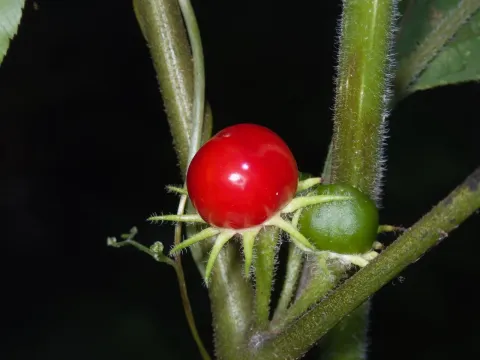
Lycianthes biflora
Lycianthes biflora
Lycianthes biflora, a member of the Solanaceae family, is typically grown from seeds. In temperate regions, starting seeds indoors 8–10 weeks before the last frost is recommended to ensure a sufficient growing season.
What the section contains
Lycianthes biflora
Seeds should be sown in a sterile, well-draining seed-starting mix. Maintain soil moisture and warmth, ideally between 22 and 25 degrees Celsius, to promote uniform germination within two to three weeks.
Once the seedlings develop at least two sets of true leaves, they should be transplanted into individual pots to avoid root congestion. This step is essential for establishing a robust root system before field planting.
Acclimatizing the young plants to outdoor conditions is necessary. Gradually introduce them to sunlight and wind over a period of 10–14 days to prevent transplant shock.
Transplanting into the permanent garden site should occur only when soil temperatures have consistently risen. Ensure a spacing of 50–60 cm to allow for adequate airflow between plants.
This crop thrives in full sun, which is crucial for photosynthesis and fruit production. While it can tolerate partial shade, productivity is significantly higher in bright, open environments.
Soil quality is paramount; the plant prefers loamy, rich, and slightly acidic to neutral soil. Amending the planting area with high-quality organic matter, such as compost or aged manure, will improve yields.
Watering requirements are consistent: the soil should be kept uniformly moist but never waterlogged. Drip irrigation is highly recommended to keep the foliage dry and reduce disease risk.
Feeding the plant with a balanced NPK fertilizer during the vegetative stage, followed by high-potassium formulations during flowering, will support overall vigor and fruit development.
Regular maintenance, including weeding and mulching around the base, helps conserve soil moisture and suppresses weeds, providing the plant with a clear advantage for nutrient uptake.
Like many Solanaceae, this species is susceptible to aphids, which can cause leaf curling and transmit viruses. Early detection and the use of insecticidal soap are effective control measures.
Fungal diseases like powdery mildew may appear if humidity remains high and airflow is poor. Improving spacing and ensuring proper ventilation are the best preventive strategies.
Tomato hornworms and various beetles may feed on the foliage. Manual removal or the application of biological pesticides like Bacillus thuringiensis can keep populations at manageable levels.
Root rot caused by Phytophthora or Pythium species is a risk in heavy, poorly draining soils. Ensuring excellent drainage is the most effective way to avoid these severe pathogens.
Crop rotation is essential for long-term health. Never plant Lycianthes biflora in ground where tomatoes, potatoes, or peppers have been grown in the previous three years.