
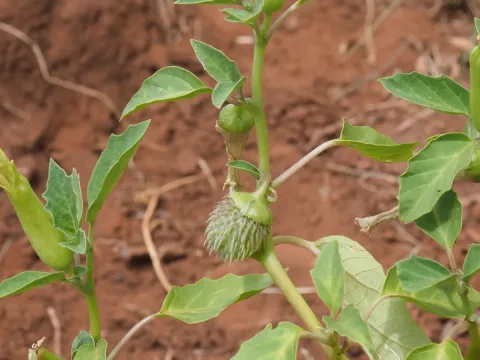
Leichhardt's thornapple
Datura leichhardtii
Sowing of Leichhardt's thornapple in temperate latitudes is preferably carried out using the seedling method to ensure the plant has a sufficient vegetative period for seed pods to ripen.
What the section contains
Leichhardt's thornapple
In regions with long, warm summers, seeds can be sown directly into open ground once the soil temperature reaches 15–18 degrees Celsius.
The seeds of this crop are characterized by a dense shell, so preliminary scarification or soaking in growth stimulants is recommended to increase germination rates.
The planting depth should not exceed 1–2 centimeters, which allows the sprouts to penetrate the soil layer faster and begin active photosynthesis.
The optimal planting pattern requires a distance of at least 60–80 centimeters between plants, as the bushes are vigorously branched and require significant space for nutrients.
The crop belongs to the Solanaceae family and is a typically thermophilic plant native to the arid regions of Australia, which dictates its high resistance to heat.
Successful cultivation requires areas with maximum lighting, protected from cold winds, as even short-term temperature drops can significantly slow down development.
Soils must be well-drained with a neutral or slightly alkaline pH, as excessive moisture leads to root system rot.
The plant responds well to moderate nitrogen fertilization during the active growth phase and phosphorus-potassium top-dressing during the budding period.
Watering should be regular but measured, avoiding stagnant water in the root zone, which is critical for preventing the development of fungal infections.
The primary threat to this crop includes sucking pests such as spider mites and various aphid species, which reproduce actively in hot weather.
In conditions of high humidity, plants can be affected by powdery mildew, appearing as a whitish coating on the leaf blades.
Root rot is a serious disease that occurs due to poor watering techniques and inadequate drainage of the planting site.
Regular monitoring of the crops is necessary to promptly remove affected specimens and prevent the spread of infection to neighboring plants.
The use of biological insecticides and fungicides is the preferred method of protection, especially if the crop is intended for pharmaceutical use.