
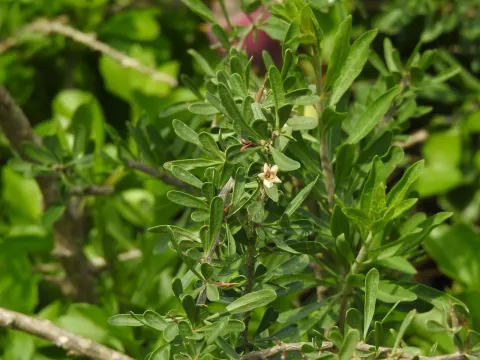
European boxthorn
Lycium europaeum
European boxthorn (Lycium europaeum) is a perennial shrub belonging to the Solanaceae (nightshade) family. This plant is native to the Mediterranean region and has adapted to thrive in harsh, arid, and semi-arid conditions across Southern Europe and North Africa.
What the section contains
European boxthorn
The species is highly valued for its ability to stabilize loose, rocky, or salty soils. It possesses a deep and extensive root system, making it an excellent candidate for soil conservation projects on steep slopes and coastal areas.
Climatically, the plant prefers sunny, warm environments with long growing seasons. While it exhibits great tolerance to drought, it requires well-drained soil to avoid root rot. It is not particularly demanding in terms of soil fertility, often growing in poor, stony conditions.
The agrotechnical requirements include periodic pruning to manage its thorny, spreading growth habit. Without proper shaping, the shrub can become unruly and difficult to manage in an agricultural or garden setting.
In terms of usage, European boxthorn is frequently utilized for creating impenetrable thorny hedges that serve as natural barriers. Its fruits, similar to those of related Lycium species, have historical applications in traditional herbal practices.
Like many plants in the Solanaceae family, European boxthorn is susceptible to various pests, particularly aphids and spider mites, which can cause significant stress during hot and dry weather periods.
Fungal diseases, especially powdery mildew, represent a constant threat when air circulation is poor. Excessive canopy density combined with high humidity creates an ideal environment for these pathogens to thrive.
Management of these threats involves cultural practices such as thinning the branches to improve airflow and solar penetration. Maintaining a clean area around the base of the shrub helps prevent the overwintering of pests and spores.
Integrated Pest Management (IPM) is recommended to ensure the health of the plant. Monitoring the foliage early in the season allows for the timely identification of infestations before they escalate.
Proper water management is essential for disease prevention. Ensuring the roots are not waterlogged while providing adequate hydration during extreme heat helps the plant maintain its natural resistance.