
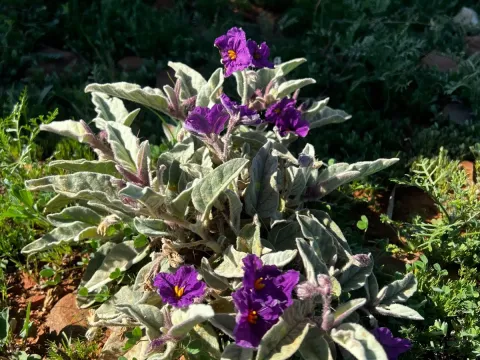
Elliptic potato bush
Solanum ellipticum
The Elliptic potato bush (Solanum ellipticum) is a perennial shrub belonging to the Solanaceae family. Native to the arid zones of Australia, it is biologically adapted to survive in environments with high heat and very low precipitation.
What the section contains
Elliptic potato bush
This crop thrives in sandy or rocky soils that provide excellent drainage, as the plant is highly susceptible to root rot caused by stagnant water. It requires full sun exposure to maintain its physiological health and promote regular fruit development.
Botanically, the species is distinguished by its prickly stems and fuzzy leaves, which serve as natural adaptations to reduce water loss. The plant produces small, ornamental, and often edible berries that transition through various shades of yellow and brown during maturity.
Agricultural practices for this species must focus on mimicking its natural desert habitat. In non-native climates, it is cultivated primarily in greenhouse environments where temperatures can be strictly controlled, avoiding any contact with freezing conditions.
Regarding its utility, the Elliptic potato bush is largely valued in agricultural research. It serves as a vital genetic reservoir for plant breeders aiming to develop drought-tolerant and stress-resistant varieties of commercial Solanaceae crops.
The primary threats to this species include soil pathogens, specifically those that thrive in moisture-heavy environments if the drainage is insufficient.
Pest pressure is often linked to common greenhouse insects, such as aphids and whiteflies, which may exploit the plant's soft foliage during intense growth phases.