
Fabiana
Fabiana
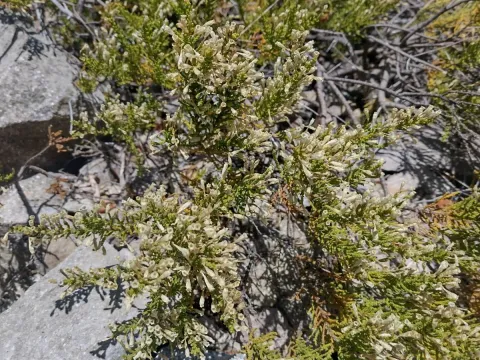
Fabiana (genus Fabiana) belongs to the Solanaceae family. Despite being related to common agricultural crops like potatoes or peppers, it bears a striking physical resemblance to heather due to its tiny, scale-like leaves. It is an evergreen shrub naturally distributed across the arid regions of South America, primarily in Chile and Argentina.
What the section contains
Fabiana
The crop requires locations with full sun exposure to thrive. From an agronomic perspective, excellent drainage is essential, as waterlogging is detrimental to the plant's health. Due to its limited cold tolerance, Fabiana is typically grown as a container plant or in greenhouse conditions in temperate climates where temperatures drop significantly in winter.
Optimal soil conditions include lightweight, sandy, or rocky substrates with a neutral to slightly acidic pH. The plant strictly avoids heavy clay soils that retain excess water, as these create an environment favorable for root rot pathogens. During the growing season, irrigation should be carefully managed to maintain hydration without saturating the substrate.
In terms of economic use, Fabiana imbricata is the most notable species, traditionally utilized in South American folk medicine for its diuretic and cholagogue properties. Beyond its medicinal value, the plant is highly appreciated in landscape design for its unique coniferous appearance and its dense, bell-shaped flowering display during the spring.
Propagation is generally performed via cuttings, as seed germination is often inconsistent and requires specific environmental cues. To maintain a compact and dense habit, young specimens require regular pruning of terminal shoots. This practice ensures better structural integrity and enhances the overall visual appeal of the plants produced for nursery trade.
The primary threats to the crop involve fungal infections resulting from poor moisture management and inadequate ventilation. Excessive watering leads to root and crown rot. Common pests include spider mites and scale insects, which can cause significant damage in indoor or greenhouse environments if humidity levels are not properly regulated.