
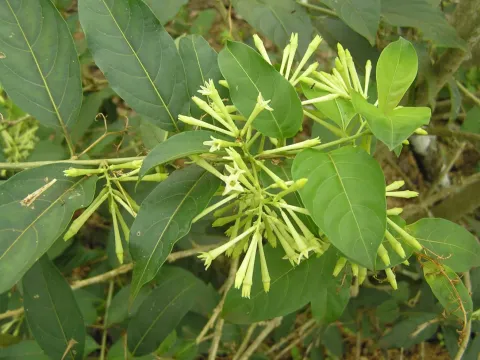
Eared Cestrum
Cestrum auriculatum
Eared Cestrum (Cestrum auriculatum) is a perennial shrub belonging to the Solanaceae family. Originating from South America, it naturally inhabits subtropical areas and mountain regions across countries like Peru and Chile.
What the section contains
Eared Cestrum
This crop thrives in well-drained, nutrient-rich soils with a slightly acidic profile. Proper site selection is crucial, as the plant requires abundant sunlight to stimulate optimal flowering and vegetative growth.
Temperature management is a key factor for this species. It prefers a mild climate, maintaining healthy growth between 18 and 25 degrees Celsius. Being a tropical plant, it cannot tolerate frost, which can cause severe damage or death to the plant tissue.
Botanically, it is identified by its distinct eared stipules at the base of the leaves, which provide its common name. The shrub produces dense clusters of aromatic flowers that are notably fragrant during the evening hours.
Agricultural practices require a consistent irrigation schedule to maintain soil moisture without causing waterlogging. Fertilization with balanced nitrogen, phosphorus, and potassium ratios supports the plant’s health during the peak growth season.
The primary agricultural use of this plant involves its application in traditional medicine and ornamental landscaping. Certain extracts derived from the plant are historically utilized for their anti-inflammatory properties.
Harvesting the leaves and bark requires careful handling, as parts of the plant contain chemical compounds that may be toxic if improperly managed. Workers should prioritize safety gear to prevent skin irritation during cultivation and processing.
In ornamental horticulture, the plant is valued for its rapid growth rate and ability to form dense hedges. It is frequently employed in garden designs within suitable climatic zones to act as a natural screen or floral feature.
Propagation is primarily achieved through stem cuttings in a controlled environment. High humidity and stable temperatures are essential to ensure successful root development before transplanting into the field or permanent containers.
Maintenance includes routine pruning to manage the shrub’s size and shape. Pruning also encourages the development of new flowering branches, ensuring the plant remains both healthy and visually appealing throughout the season.