
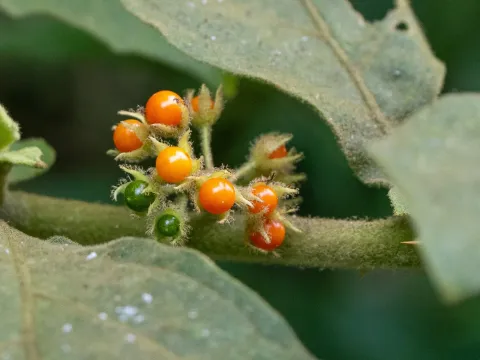
Jamaican nightshade
Solanum jamaicense
Jamaican nightshade (Solanum jamaicense) is a perennial shrub that belongs to the Solanaceae family. Native to the tropical regions of the Caribbean and Central America, this plant thrives in warm, humid forest clearings and disturbed lands.
What the section contains
Jamaican nightshade
The plant requires a strictly tropical or subtropical climate to flourish, as it is highly sensitive to cold and frost. Consistent temperature ranges, ideally between 20 and 30 degrees Celsius, are necessary for the plant to achieve its optimal growth and foliage development.
Regarding soil, Jamaican nightshade prefers fertile, well-drained loamy soils. It cannot tolerate waterlogging, which often leads to root suffocation. Regular soil aeration and organic fertilization are recommended for healthy shrub growth in a controlled environment.
Agricultural management involves careful irrigation, especially during the dry season, to ensure the plant maintains its vegetative vigor. Pruning is often performed to manage its spreading growth habit and to facilitate the harvesting of leaves or berries for scientific research.
The economic and research interest in Solanum jamaicense centers on its phytochemical constituents. The plant is studied primarily for its potential pharmacological applications, as it contains bioactive compounds that may possess medicinal properties when processed correctly.
Common pests include aphids, whiteflies, and mites, which are prevalent in nightshade crops worldwide. Pathogens such as fungi causing powdery mildew or early blight can also affect the plants, particularly in environments with poor air circulation or excessive humidity levels.