
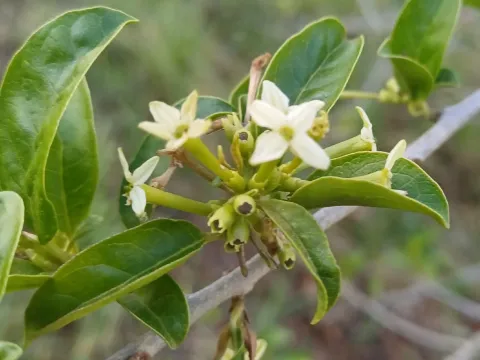
Smooth cestrum
Cestrum laevigatum
Smooth cestrum (Cestrum laevigatum) is an evergreen shrub belonging to the Solanaceae family. Native to South America, this species is well-adapted to warm, humid environments, flourishing in sunny, well-draining locations.
What the section contains
Smooth cestrum
Botanically, the plant is characterized by its smooth, lanceolate leaves and tubular, yellowish-green flowers. It is known for its intense fragrance, which is highly pronounced during evening hours, attracting various pollinators in its natural habitat.
Regarding climate requirements, the plant is not frost-tolerant. It requires consistent warmth and protection from freezing temperatures. Commercial or ornamental cultivation is typically concentrated in greenhouse environments or tropical regions.
Soil quality is paramount for success; the shrub thrives in fertile, loamy soils with a balanced pH level. Proper drainage is essential to prevent waterlogging, which the species finds detrimental to its long-term health.
In terms of agricultural management, regular pruning is necessary to maintain a compact shrub shape and encourage vigorous blooming. During the growing season, consistent moisture and balanced fertilization are recommended for optimal biomass production.
Spider mites are the most common pests associated with this plant, especially when grown in low-humidity conditions. Infestations can lead to leaf yellowing and reduced vigor if left unmanaged.
Mealybugs can also infest the stems and undersides of leaves, weakening the plant. Manual removal or the application of horticultural oils is often effective for smaller infestations.
Root rot remains the primary threat regarding plant diseases. It is usually triggered by poor drainage or overwatering. Using a well-aerated substrate is the best preventative measure for this condition.
Aphids may target new, tender growth during the peak spring season, potentially spreading viral diseases. Monitoring and prompt treatment with mild insecticidal soaps are highly advisable.
It is critical to note that all parts of Cestrum laevigatum contain toxins. The plant is considered potentially poisonous to livestock and domestic animals, requiring careful placement in managed landscapes.