
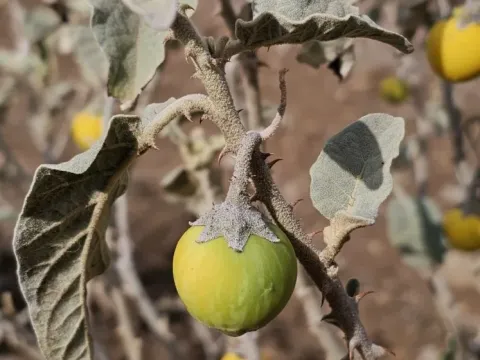
Sodom apple
Solanum incanum
Sodom apple, known scientifically as Solanum incanum, is a perennial shrub belonging to the Solanaceae family. It is native to the Middle East and Africa, where it has evolved to thrive in arid and semi-arid environments with harsh ecological conditions.
What the section contains
Sodom apple
The plant exhibits remarkable adaptability to various soil types, preferring well-drained, sandy, or rocky ground. It is highly valued for its ability to withstand extreme heat and prolonged droughts, making it a robust species in challenging climates.
For optimal growth, Sodom apple requires full sun exposure throughout the day. It is intolerant of frost and waterlogged soils, which can lead to rapid decay of the taproot system. Proper site selection is the primary factor in successful crop management.
Botanically, it is characterized by grey-green tomentose leaves and purple to white star-shaped flowers. The fruit is a globose berry that turns yellow upon ripening, often used in traditional ethnomedicine due to its secondary metabolites.
Cultural practices should focus on maintaining weed-free rows to prevent nutrient competition. While it requires little irrigation, supplementary watering during the fruit-setting stage can significantly enhance the development of the berries.
Major pests affecting this crop include the Colorado potato beetle and whiteflies, which can quickly defoliate the shrub if not monitored. These insects are particularly prevalent during the warm growing season when the plant is most active.
Fungal diseases like powdery mildew and late blight represent significant threats in humid climates. Farmers must ensure proper ventilation and spacing between plants to reduce the microclimate humidity that favors fungal spore germination.
Nematode infestations in the root zone are a persistent problem in sandy soils where the plant often thrives. Implementing crop rotation cycles with non-solanaceous crops is the most effective management strategy to keep nematode populations at bay.
Viral infections transmitted by aphids can result in stunted growth and distorted leaf morphology. Controlling the vector populations is essential for maintaining the overall vigor and productivity of the shrub plantation throughout the year.
Integrated pest management (IPM) is strongly recommended to protect both the yield and the quality of the harvest. This includes scouting for pests and using biological control agents alongside judicious chemical application when necessary.