
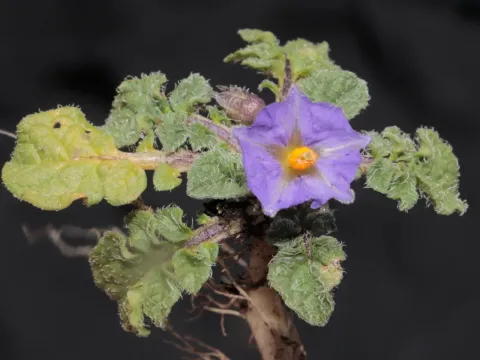
Solanum acaule
Solanum acaule
Solanum acaule is a wild plant species belonging to the Solanaceae family, known primarily as a wild relative of the common potato. It originates from the high-altitude regions of the Andes, thriving in environments where few other crops can survive.
What the section contains
Solanum acaule
The plant is morphologically distinct, featuring a rosette-like growth habit with leaves pressed close to the ground. This adaptation helps it conserve heat and resist the strong winds prevalent at altitudes ranging from 3000 to 4500 meters.
Perhaps its most significant trait is its exceptional tolerance to freezing temperatures. Solanum acaule can withstand temperatures as low as -8°C, making it a highly prized genetic resource for scientists developing new cold-resistant potato cultivars.
In terms of cultivation, the species requires well-drained, porous soils. It is intolerant of waterlogging, which often leads to root rot, and it performs best in cool, high-altitude climates rather than hot, humid environments.
Economically, it is not grown for human consumption due to the small size of its tubers and a high concentration of glycoalkaloids. Instead, its primary role is in plant breeding, where it provides essential genes for stress and frost resistance.
While Solanum acaule has developed robust natural defenses, it remains susceptible to late blight, particularly under conditions of high humidity or poor soil drainage. Pathogen monitoring is essential in research settings.
Insect pests such as aphids and potato beetles are common threats in both natural and controlled environments. Aphids are particularly dangerous as they act as vectors for various plant viruses that can cripple genetic stock.
Nematode resistance is a key area of study, and while the species shows resilience to some strains, it can still be affected by persistent soil-borne infestations if not managed correctly.
Root zone pathogens, including various fungal species, represent a threat if the planting site lacks adequate air circulation. Maintenance of appropriate hygiene protocols in breeding facilities is critical to crop health.
Virus management is perhaps the most difficult aspect of conserving this species. Routine screening is necessary to ensure the genetic material remains pure and free from degenerative viral loads.