
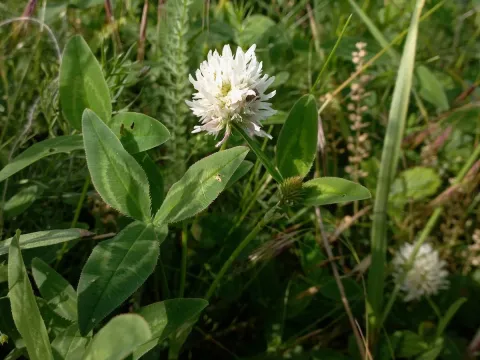
Zigzag clover
Trifolium ambiguum M. Bieb.
Zigzag clover (Trifolium ambiguum) is a highly persistent perennial legume characterized by a robust underground rhizomatous system. Sowing is typically carried out in early spring, as the seeds require reliable moisture for successful germination and emergence.
What the section contains
Zigzag clover
Seedbed preparation must ensure a firm and fine texture to promote uniform seedling development. As the seeds possess a hard coat, scarification prior to planting is highly recommended to improve germination rates and ensure a denser stand establishment.
The optimal seeding depth is shallow, ranging from 1 to 2 centimeters. Because this plant develops slowly during the establishment year, it is crucial to manage weed competition effectively, allowing the clover to allocate energy toward root and rhizome development.
Post-seeding compaction using a roller is an essential agronomic practice. This action ensures optimal seed-to-soil contact, which is vital for efficient moisture absorption in environments where early spring rainfall might be erratic.
Seeding rates typically range from 8 to 12 kilograms per hectare, depending on the desired density and local soil conditions. Once established, the rhizomatous growth habit allows the stand to thicken over time, often outcompeting invasive species and providing long-term soil cover.
This species is renowned for its exceptional winter hardiness, as it originates from high-altitude regions. It thrives in diverse climates, tolerating extreme temperature fluctuations that would damage less hardy forage legumes.
Zigzag clover is adaptable to a wide range of soil types, showing superior performance on well-drained loams. It possesses a remarkable tolerance for acidic and low-fertility soils, making it an excellent choice for stabilizing slopes or reclaiming marginal lands.
The plant is famously drought-tolerant due to its deep-reaching root system and extensive underground spreading. This biological adaptation allows the clover to survive prolonged summer heat and maintain green biomass even when surface moisture is depleted.
Regarding soil fertility, phosphorus and potassium applications are beneficial for root strength. Nitrogen fertilization is rarely necessary, as the plant engages in symbiotic nitrogen fixation, naturally enriching the soil and reducing the need for external chemical inputs.
Sunlight exposure is important for maximizing growth rates. While it is tolerant of mixed-species swards, it performs best in full sunlight and should be managed to avoid shading by taller, faster-growing forage grasses during the establishment phase.
Productivity reaches its peak 3 to 5 years after sowing, once the underground rhizomes are well-established. Zigzag clover produces high-quality forage that is rich in proteins, making it an ideal choice for ruminant livestock diets.
The crop is highly suitable for grazing due to its resilience against trampling and heavy livestock pressure. The rhizomes allow the plant to regenerate rapidly after grazing, ensuring a sustainable supply of nutritious green matter throughout the growing season.
Dry matter yields are competitive, particularly when managed within a productive pasture system. When harvested for hay, it provides a high-protein supplement that maintains its nutritional value even as the plant matures during the bloom stage.
The longevity of a zigzag clover stand is one of its greatest economic advantages. Unlike short-lived clover species, it can persist for over a decade under good management, significantly reducing the costs associated with frequent field renovation and replanting.
Forage quality is excellent, with high digestibility and minimal risk of bloat compared to some other legume varieties. Livestock generally show a strong preference for this clover, which helps in increasing daily weight gain and overall milk production.
Zigzag clover is generally more disease-resistant than many other common forage legumes. However, excessive soil moisture and poor drainage can predispose the plant to root rot pathogens, which may weaken the rhizome system and decrease overall stand density.
Pests such as leaf weevils and various seed-feeding insects can cause damage during the reproductive phase. While usually not fatal to the plant, these infestations can significantly impact seed yield, making monitoring essential for seed-production fields.
Preventive management includes practicing proper crop rotation and ensuring adequate field drainage to avoid conditions that favor fungal development. Maintaining soil health and proper nutrient levels helps the plant resist secondary infections and environmental stress.
In some regions, nematodes may pose a threat to the root system, particularly in heavier soil types. Selecting appropriate planting sites and avoiding the introduction of contaminated plant materials are the best strategies to keep such infestations at bay.
- Root rot pathogens in waterlogged soils
- Leaf-feeding weevils affecting foliage
- Seed-feeding insects during bloom
- Nematode pressure in heavy soil conditions