
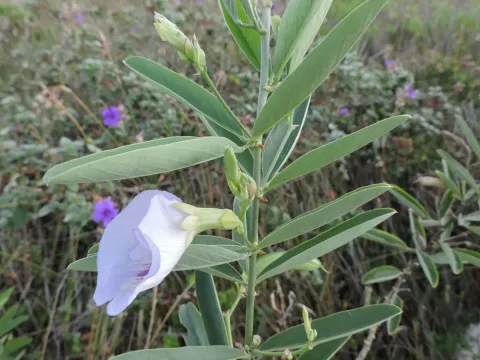
Clitoria guyanensis
Clitoria guyanensis
Clitoria guyanensis is a perennial legume species primarily cultivated in tropical regions, where it is sown at the onset of the rainy season to facilitate germination.
What the section contains
Clitoria guyanensis
Seed preparation is crucial, as the seeds have hard coats that often require scarification to improve overall germination rates in field conditions.
The seeds should be planted at a shallow depth of 1–2 centimeters, ensuring sufficient moisture contact in well-prepared, friable soil beds.
Initial growth is notably slow, requiring farmers to implement effective weed control strategies during the establishment phase to prevent seedling suppression.
Strategic timing of sowing ensures that the plant develops a robust taproot system, which is essential for survival during subsequent dry spells.
Belonging to the Fabaceae family, Clitoria guyanensis is highly valued for its ability to thrive in poor, acidic, and nutrient-deficient soils.
This species is well-adapted to environments with high soil acidity and aluminium toxicity, where many other forage crops typically fail to establish.
The plant requires full sun exposure for optimal growth; significant shading typically results in reduced biomass production and weakened stem development.
It demonstrates reasonable drought tolerance once established, although consistent rainfall is necessary to achieve high yields of high-quality forage.
Well-drained soil is preferred to prevent root rot, as the plant does not tolerate prolonged waterlogging during the growing season.
As a legume, Clitoria guyanensis provides significant biomass yields that are rich in protein, making it an excellent component for livestock feed.
Its ability to fix atmospheric nitrogen improves soil fertility, providing an ecological advantage for intercropping and pasture rotation systems.
Sustainable pasture management, including controlled rotational grazing, is essential to maintain high productivity over multiple growing seasons.
The nutritional profile of the forage remains stable, which helps in maintaining the health and weight of livestock even when grazing on marginal lands.
Yield outputs can be further enhanced by targeted micronutrient application, particularly in soils that are severely depleted of essential minerals.
The primary threats to Clitoria guyanensis include fungal pathogens that exploit high humidity and stagnant water conditions, potentially damaging root systems.
Leaf-eating insects and caterpillars are common pests that can cause defoliation, significantly reducing the plant's capacity for photosynthesis.
Proactive management of these threats involves monitoring and selecting varieties that show natural resistance to local pest and disease complexes.
Maintaining proper plant spacing helps to improve airflow within the canopy, which effectively reduces the incidence of moisture-related fungal outbreaks.
Early detection of infestations allows for effective management, ensuring that the crop remains healthy and productive throughout the year.