
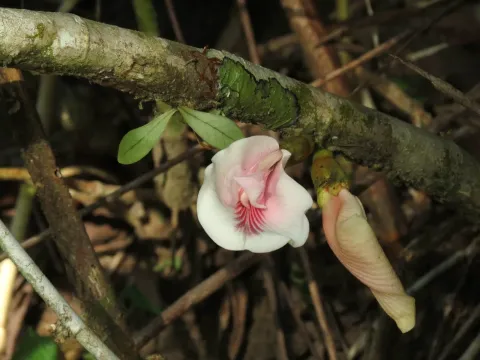
Clitoria javitensis
Clitoria javitensis
Clitoria javitensis is a tropical species that requires careful timing for sowing, typically initiated at the beginning of the local rainy season.
What the section contains
Clitoria javitensis
In managed agricultural environments, seeds should be sown when soil temperatures remain consistently between +22 and +25 degrees Celsius.
Mechanical or chemical scarification of the seeds is highly recommended, as their hard seed coat can otherwise delay germination significantly.
Row planting with a spacing of 40–50 centimeters is optimal, ensuring that each plant has sufficient access to light and soil nutrients.
Seeds should be covered with 2 to 3 centimeters of soil, ensuring firm contact with the substrate to facilitate moisture absorption and growth.
As a member of the Fabaceae family, this crop requires specific environmental conditions to thrive and reach its maximum biomass potential.
The plant prefers well-drained, fertile soils with a neutral or slightly acidic pH, as it is highly intolerant of waterlogging and heavy clay soils.
Clitoria javitensis is a heliophilic species and achieves the highest growth rates when grown in open areas with full exposure to sunlight.
The ideal temperature for development is between +20 and +30 degrees Celsius, as the species is extremely sensitive to low temperatures and frost.
While the plant develops a deep root system capable of enduring short droughts, supplemental irrigation during dry spells significantly boosts yields.
The primary agricultural objective for this crop is the production of nutritious green biomass, often utilized in high-quality livestock feed.
This legume contributes to soil health through nitrogen fixation, making it an excellent candidate for crop rotation systems to restore fertility.
With adequate fertilization and proper spacing, multiple harvests of green forage can be achieved within a single growing season.
Total yield is heavily dependent on management intensity, soil quality, and the number of regrowth cycles successfully maintained throughout the year.
Harvesting during the peak flowering stage is recommended, as this phase provides the best balance between protein content and structural fiber.
Fungal diseases are the primary threat to Clitoria javitensis, particularly in humid climates where poor air circulation exists within the crop canopy.
Leaf-eating insects and various caterpillar species can cause substantial damage to the foliage, necessitating regular monitoring of the fields.
Root rot, often caused by excessive soil moisture, can decimate stands, emphasizing the need for proper field drainage and irrigation management.
Integrated pest management, including the use of bio-rational insecticides, is recommended to control populations while maintaining the crop's quality.
Maintaining a proactive approach to crop scouting ensures that potential infestations or disease outbreaks are detected and addressed early.
Harvesting should be conducted using mechanical mowers during the morning hours, once any dew has dried, to preserve the quality of the biomass.
A cutting height of at least 5–7 centimeters is essential to preserve the plants' regrowth capacity and prevent long-term damage to the crown.
The harvested forage is usually wilted in the field and subsequently processed into silage or high-protein hay for livestock consumption.
Care must be taken during the handling and transportation of the crop to minimize leaf shatter, as the leaves contain the bulk of the protein.
Efficiency in the harvesting chain is critical to ensure that the biomass is processed shortly after cutting to prevent nutritional degradation.