
White-tip clover
Trifolium variegatum Nutt.
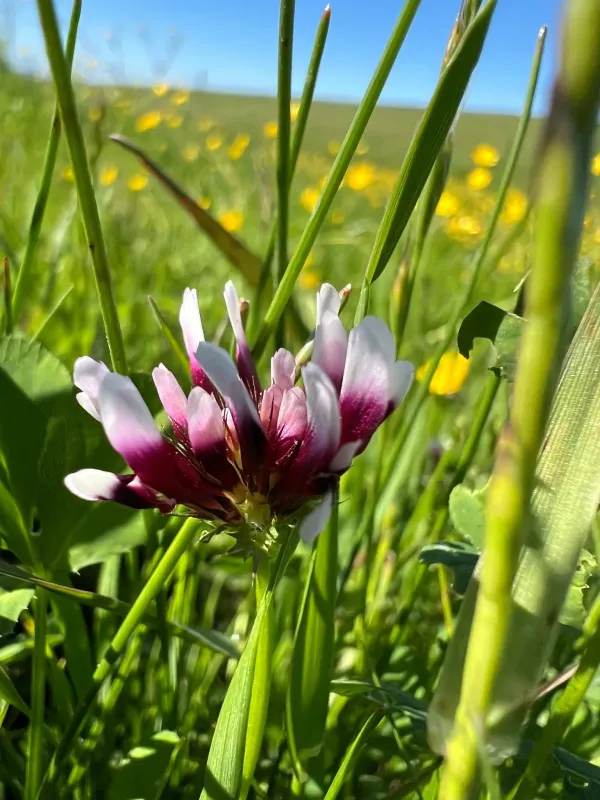
Description
Growing requirements
White-tip clover (Trifolium variegatum) is an annual herbaceous plant belonging to the Fabaceae family. It is recognized for its slender growth habit and distinctive, often bicolored, flowering heads that provide its common and scientific names.
The native range of this species is primarily in western North America, where it thrives in moist meadows, stream banks, and other areas with consistent water supply throughout the growing season.
The plant demands a temperate climate with sufficient moisture. In agricultural contexts, it is best suited for sunny locations that receive adequate rainfall or have reliable irrigation, as it does not tolerate severe drought.
Regarding soil, it prefers loamy or sandy substrates with neutral to slightly acidic pH levels. Soil fertility is enhanced by the presence of symbiotic bacteria that allow the plant to fix atmospheric nitrogen effectively.
In terms of usage, it is valued as a component in seed mixtures for forage and pasture improvement, helping to increase the nutritional density and nitrogen content of the soil profile.
Main diseases and pests
The main threats to White-tip clover include various fungal diseases that proliferate in overly humid conditions, such as powdery mildew or rusts that can affect leaf surface area and photosynthesis.
Pests, specifically clover weevils, represent a significant concern as they can feed on the foliage and reproductive structures, thereby reducing both biomass yield and potential seed harvest.
Preventative management involves ensuring proper spatial distribution of plants to promote air circulation, which helps in reducing the humidity trapped within the lower canopy.
Early detection of pests or pathogens is critical. Farmers should implement integrated pest management strategies to keep the population levels below the economic threshold of damage.
Sustainable production practices, including regular monitoring and the use of healthy, clean seeds, remain the most effective methods to mitigate the impact of common biological threats.