
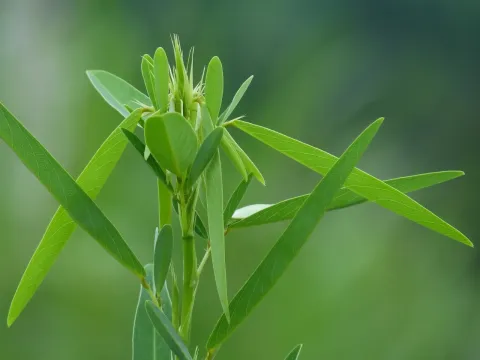
Codariocalyx
Codariocalyx
The seeds of Codariocalyx have a hard seed coat, making scarification necessary before planting to ensure uniform germination. Seeds should be sown in a light, well-draining substrate at a depth of about 0.5 to 1 cm.
What the section contains


Codariocalyx
The ideal time for sowing is during the spring season, providing the seedlings with a longer daylight period for establishment. In non-tropical regions, this crop is typically cultivated in greenhouses or controlled indoor environments.
Optimal germination requires maintaining soil temperatures between +25°C and +28°C. High humidity levels are crucial during the early stages of development until the seedlings have firmly established their root system.
Growth is relatively slow in the first few weeks, and care should be taken to avoid over-handling the delicate seedlings. Transplanting into individual pots should only occur after the plant has developed its first true leaves.
Consistent lighting is essential for healthy development. Insufficient light during the seedling phase often results in weak, leggy stems that struggle to support the plant's later growth.
Codariocalyx belongs to the Fabaceae family and is native to the tropical forests of India and Southeast Asia. It is widely recognized for its unique ability to move its leaflets in response to light and sound vibrations.
This species requires a warm climate and is highly sensitive to cold; temperatures below +15°C can cause significant physiological stress or plant death. The best growth occurs in environments ranging from +22°C to +30°C.
The ideal growing medium is a mixture of peat-based compost, leaf mold, and coarse sand or perlite. Soil must be porous to allow for good aeration, as the roots are prone to suffocation if the medium is too compacted.
High relative humidity is necessary for the plant to maintain its characteristic leaf movements and overall vigor. Regular misting or the use of humidifiers is recommended in dry indoor settings.
Watering should be frequent but controlled to ensure the soil remains moist without becoming waterlogged. During the peak growing season, regular liquid fertilization with a balanced, low-nitrogen formula is beneficial.
Common pests include spider mites and mealybugs, which thrive in environments where humidity is lacking. These pests can rapidly infest the plant, causing yellowing of the foliage and eventual leaf drop.
Root rot is the most common pathology, typically caused by overwatering or poor drainage. Once symptoms of stem decay appear, recovery is very difficult, making preventative irrigation management essential.
Powdery mildew may develop in areas with poor airflow and stagnant moisture. Maintaining constant air circulation around the plants is one of the most effective ways to mitigate the risk of fungal outbreaks.
Routine inspection of the leaf axils and the undersides of leaflets is critical for early detection of pest colonies. Prompt removal of infested foliage or treatment with appropriate insecticides is necessary to preserve the plant.
To keep the crop healthy, avoid overcrowding. Proper spacing allows for better light penetration and airflow, which naturally reduces the likelihood of both pest infestations and fungal infections.