
Woolly clover
Trifolium tomentosum L.
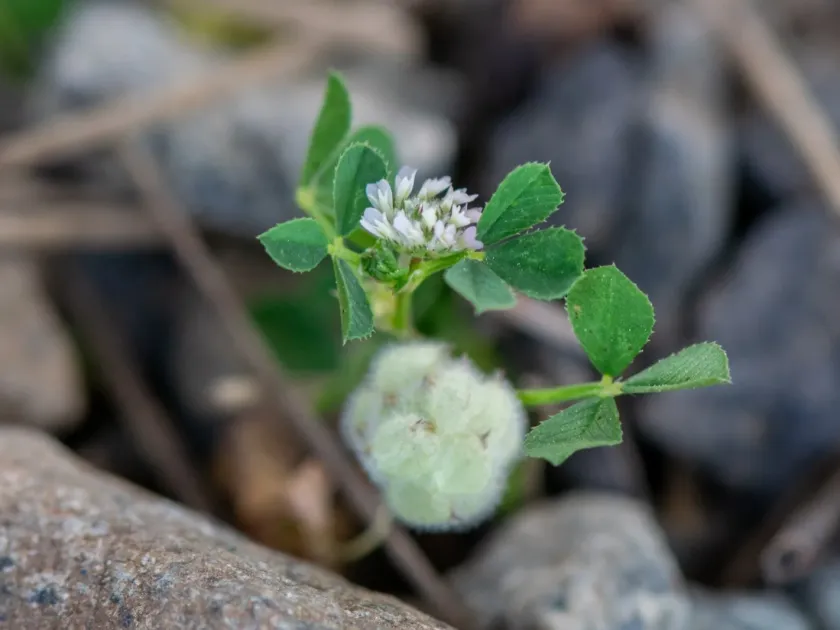
Description
Sowing dates
Woolly clover (lat. Trifolium tomentosum L.) is an annual herbaceous plant belonging to the Fabaceae family. It is commonly found in natural grasslands and pasture ecosystems across its native range.
Sowing typically takes place in autumn or early spring, depending on the climatic conditions of the region. The seeds exhibit high germination vigor when moisture is sufficient for establishment.
Effective establishment requires adequate soil contact, often achieved by rolling the field after sowing. Seed density is determined based on the desired plant stand and local agronomic practices.
The plant engages in a symbiotic relationship with nitrogen-fixing bacteria. This biological process significantly improves soil nitrogen levels, benefiting the overall pasture productivity.
As a Mediterranean-origin species, its life cycle is synchronized with seasonal precipitation, ensuring optimal growth during the vegetative phase.
Growing requirements
Woolly clover thrives in open, sunny environments. Shade significantly reduces its growth potential and density, making it less suitable for forest-edge or shaded agricultural landscapes.
The species is adaptable to various soil types, preferring loamy or sandy loam soils with a neutral or slightly alkaline pH. It demonstrates notable tolerance to saline soil conditions.
Sufficient moisture is essential during the active growing season. While the plant possesses some degree of drought tolerance, consistent rainfall is required for maximum biomass production.
Temperature sensitivity is a limiting factor for its cultivation. The species is adapted to mild climates and is susceptible to severe frost, which restricts its agricultural use to warmer zones.
Agronomic management involves weed control, particularly during the seedling phase, as woolly clover grows slowly and can be easily outcompeted by more aggressive grasses.
Yield
The yield of woolly clover is primarily evaluated within the context of mixed-species pastures. Its high protein content makes it a valuable feed component for livestock, including cattle and sheep.
As a forage crop, it provides excellent nutritional value, supporting animal health and growth. It is highly palatable, which encourages efficient grazing during the growing season.
The plant forms a dense mat, which serves as a natural barrier against soil erosion. This structural property is beneficial for stabilizing degraded lands and improving soil physical characteristics.
Sustainability is achieved through appropriate pasture rotation. By allowing the plants to seed periodically, the stand can be maintained naturally over many years without the need for reseeding.
Management must focus on balancing grazing pressure to ensure the persistence of the plant population while maximizing the harvest of high-quality green forage.
Main diseases and pests
Pathogenic threats include various fungal diseases that thrive in high-humidity conditions. Powdery mildew and rust species are common, potentially reducing biomass and overall field productivity.
Pests, particularly seed-feeding insects, can damage the reproductive organs, leading to lower seed yields. Integrated pest management (IPM) is recommended to mitigate these risks.
Competition from perennial weeds remains a major obstacle during the establishment phase. Effective herbicide management or mechanical control is necessary for initial field success.
Overgrazing poses a significant risk to the plant's long-term viability, as it may lead to soil compaction and the dominance of less desirable species within the pasture.
- Implement systematic monitoring for disease outbreaks.
- Use certified and clean seed lots.
- Practice rotational grazing to maintain stand health.
Harvesting
Seed harvesting requires careful timing, as the seed pods are prone to shattering upon full maturity. Harvesting should commence when the majority of the pods have turned color.
Mowing and swathing are standard practices for seed production. This allows for uniform drying and minimizes loss from shattering while ensuring the seeds reach optimal maturity.
Post-harvest processing involves threshing and cleaning to remove impurities. Maintaining low moisture content during storage is crucial for preserving germination viability over time.
For forage purposes, the harvest is managed through grazing. Proper stocking rates ensure that the vegetative portion of the plant is consumed efficiently while leaving sufficient biomass for regrowth.
Allowing for natural reseeding cycles is a fundamental aspect of woolly clover management, ensuring the persistence of the stand in naturalized pasture systems.