
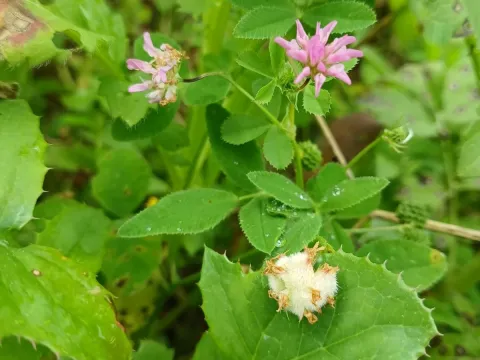
Clusius clover
Trifolium clusii
Clusius clover (Trifolium clusii) is a perennial herbaceous plant belonging to the Fabaceae family. It is primarily distributed across the alpine and subalpine regions of Europe, showcasing a remarkable adaptation to mountainous environments characterized by thin, rocky soils and cold climates.
What the section contains
Clusius clover
The plant thrives in well-drained, porous soil conditions where it can extend its deep taproot system to access nutrients and moisture. It is particularly well-suited to limestone substrates, preferring neutral to slightly alkaline soil pH levels typical of its natural mountainous habitat.
Climate-wise, the species requires cool ambient temperatures and high solar radiation. It exhibits significant frost tolerance, making it an excellent candidate for agricultural use in regions where summer temperatures remain mild and winters are harsh and prolonged.
In terms of agricultural management, this clover is valued for its nitrogen-fixing capabilities, which enhance soil fertility when integrated into pasture mixtures. It requires minimal fertilizer inputs, as its symbiotic relationship with bacteria provides sufficient nitrogen for healthy development.
Botanically, Trifolium clusii is distinguished by its compact growth habit, consisting of dense basal rosettes and short, stout flowering stems. This morphology helps the plant withstand strong alpine winds and heavy snow loads without sustaining mechanical damage.
Common phytopathological risks include fungal infections like powdery mildew, particularly in locations with poor air circulation or extended periods of high relative humidity. Maintaining proper spacing and avoiding overcrowding are essential strategies to prevent disease outbreaks.
Pests such as clover root curculios can pose a threat by feeding on the root nodules, which impairs the plant's ability to fix nitrogen effectively. Integrated pest management, focusing on biological controls, is the preferred approach for maintaining crop health.
Root rot, driven by soil-borne pathogens, is a significant threat in poorly drained soils. Farmers must ensure proper slope or artificial drainage systems to prevent waterlogging, which is a major precursor to root decline in leguminous species.
Leaf-feeding insects may occasionally infest stands, though damage is often localized and manageable. Regular monitoring of the foliage helps in identifying pest pressure early, allowing for targeted intervention before infestation becomes widespread.
The overall resilience of the species is high, provided that the ecological conditions match its mountain origin. Utilizing resistant varieties and ensuring high-quality, disease-free seed stock significantly mitigates most cultivation-related threats.