
White clover
Trifolium repens L.
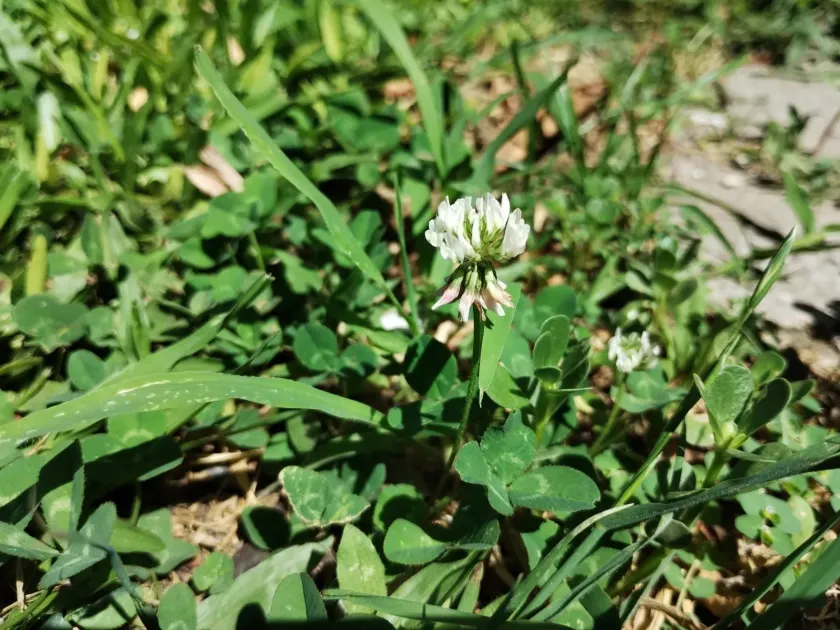
Description
Sowing dates
White clover is a perennial legume typically sown as part of pasture mixtures or as a standalone forage crop. The ideal sowing periods are early spring, when soil moisture is plentiful, or late summer to allow for establishment before the onset of winter frosts.
The seeding rate generally ranges from 8 to 12 kg per hectare, depending on the specific application and soil conditions. Seeds should be sown shallowly, ideally at a depth of 1 to 2 centimeters, to ensure proper germination and rapid development.
Effective seedbed preparation is essential, requiring a firm and level surface to promote optimal contact between the seed and soil. Given that white clover seedlings compete poorly with fast-growing weeds, effective pre-planting weed management is highly recommended.
In cases where white clover is sown under a cover crop, it is important to avoid excessive shading, which can inhibit the initial growth of the clover. The plant develops relatively slowly during its first few months, requiring patience during the establishment phase.
Once established, the plant utilizes stolons to spread horizontally, effectively forming a dense mat. This vegetative expansion is a key trait that allows it to persist and thrive in diverse agricultural landscapes over many years.
Growing requirements
White clover is widely valued for its adaptability to various environmental conditions. It thrives best in loamy soils with adequate moisture and a neutral pH level, though it is known to tolerate a wide range of soil textures including clay-rich grounds.
Water availability is critical for white clover, particularly during germination and the active growth stages. While it is tolerant of short-term flooding, prolonged periods of drought can cause significant stress, resulting in reduced biomass and diminished quality.
As a light-loving plant, white clover performs best in sunny environments. Heavy shade from taller crops or dense canopy cover can significantly reduce its vitality, making it less suitable for systems where high light competition is present.
A primary agronomic benefit of white clover is its ability to fix atmospheric nitrogen through symbiosis with Rhizobium bacteria. This biological process reduces the need for synthetic nitrogen fertilizers, making it a sustainable choice for pasture improvement.
The plant demonstrates moderate cold tolerance, provided there is a stable snow cover to insulate the roots. In regions with severe winters and no snow, the plant may suffer from crown damage due to frequent freeze-thaw cycles.
Yield
The biomass yield of white clover in pasture systems typically ranges between 15 and 25 tonnes per hectare annually. Yields can be significantly higher under irrigated conditions, provided that soil nutrient levels remain balanced.
The nutritional profile of white clover is characterized by high levels of crude protein and essential minerals, making it a high-quality forage source for livestock. It is often included in grazing mixes to enhance the dietary quality of the total pasture.
To sustain long-term productivity, a balanced fertility program focusing on phosphorus and potassium is advised. Nitrogen application should be kept to a minimum to encourage the clover to fix its own nitrogen, rather than relying on external inputs.
With proper rotational grazing, a white clover stand can remain productive for up to eight years. Frequent mowing or grazing encourages regrowth and keeps the clover in an active, vegetative stage, which maximizes its protein content.
Seed production requires careful management due to the indeterminate flowering habit of the plant. Specialized equipment is often necessary to minimize shatter losses and ensure high-quality yields during the harvesting process.
Main diseases and pests
Common diseases affecting white clover include anthracnose, powdery mildew, and various rusts. These conditions are most prevalent in humid, crowded stands where air circulation is restricted, often requiring careful management of stocking density.
Pests such as the clover weevil and various leaf-feeding insects can cause significant damage. These pests not only reduce leaf area but can also affect seed production, potentially leading to lower yields in seed-growing operations.
Integrated pest management, including crop rotation and the selection of disease-resistant varieties, remains the most effective way to protect the crop. Regular monitoring for early signs of infestation is a vital component of successful farm management.
Below-ground pests like nematodes can cause subtle but significant damage to the root system, weakening the plants. In such cases, soil sampling and analysis are recommended to determine the scale of the impact and appropriate corrective actions.
The use of pesticides should be approached with caution, especially during the flowering period, as white clover is a major source of forage for pollinators like honeybees. Maintaining a balance between crop protection and bee safety is critical.
Harvesting
Rotational grazing is the most common and effective method for harvesting white clover in pasture-based systems. Dividing fields into paddocks allows for timely grazing and sufficient rest periods, which are crucial for plant recovery and root health.
When harvesting for hay or silage, the ideal timing is at the early flowering stage. This phase provides the best balance between total dry matter yield and nutritional quality, specifically regarding protein content and fiber digestibility.
Care must be taken during the curing process for hay, as the high-protein leaves are prone to shattering if handled too aggressively. Modern mechanical techniques, such as conditioning and tedding, help ensure even drying and higher end-product quality.
Harvesting for seed should occur during dry weather to prevent moisture-related damage and to minimize shatter losses. The harvested seed must be cleaned, dried to a safe moisture content, and stored in a cool, dry place to maintain germination rates.
Efficient harvesting strategies not only maximize immediate economic returns but also help in maintaining the long-term vigor of the clover stand. Proper field management is the foundation of high-quality forage production.